0800 30 13 77

 0800 30 13 77
 En


 Back
Screw pumps: features and applications
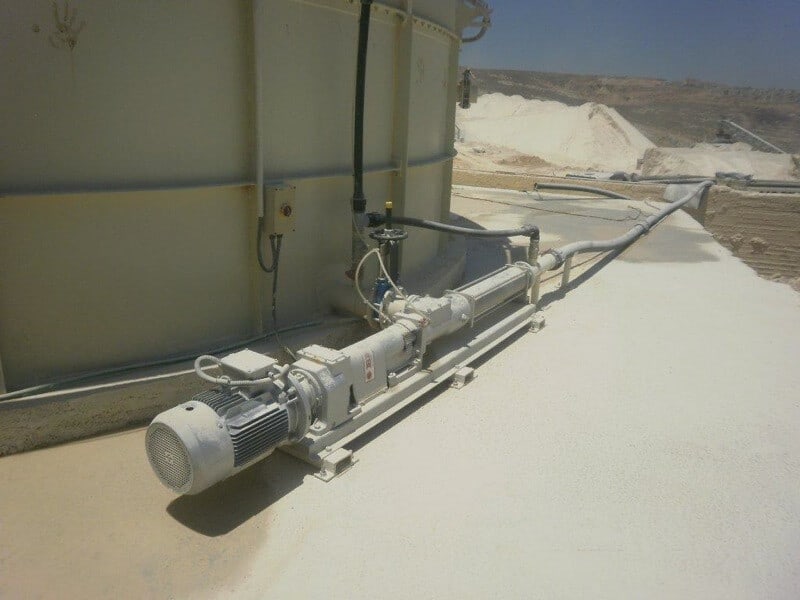
When there is a need to pump ordinary water, most standard units can easily handle the task. But what should be done when the liquid becomes as thick as tar, contains solid impurities, or requires the utmost care to prevent agitation and foaming? Under such conditions, conventional equipment falls short, and the screw pump (also known as a auger pump) steps in. This is a specialized industrial solution capable of operating effectively where other mechanisms wear out quickly.
Finding reliable and energy-efficient equipment for complex technological processes is a task on which the uninterrupted operation of any enterprise directly depends. The industrial company “Dalgakiran” offers high-quality engineering solutions that combine affordability, durability, and European-level reliability. We are convinced that high-quality equipment should save a business’s resources, not drain its funds. And most importantly—we’re here for you in any situation, because everything works with “Dalgakiran”!
In this review, we’ll discuss screw pumps in more detail. We’ll examine their design and areas of application.
How a screw mono pump works
The operation of this equipment is based on a concept that is ingenious in its simplicity, patented in the early 20th century by engineer René Mouano. Structurally, the main working component is a screw pair, consisting of two key elements:
- Rotor — a metal auger (internal screw) with a spiral shape that performs a rotational motion.
- Stator—a stationary outer housing (usually made of durable elastomer), the inner shape of which has one more spiral pitch than the screw.
When the rotor rotates inside the stator, closed, sealed chambers form between them. As the screw moves, these chambers smoothly travel along the axis from the inlet to the outlet. They effectively capture a portion of the fluid and gently push it forward. Thanks to this, pumping occurs without pulsations, agitation, or changes to the product’s structure, and the flow rate remains stable and uniform at any speed.

Features of screw pumps
The main difference between a screw pump and a centrifugal or piston pump is its ability to handle highly complex media. High viscosity is not an obstacle for it, but rather a perfectly acceptable condition.
Among the key design and operational features, it is worth noting the high self-priming capability, as most models create sufficient vacuum at the inlet to draw the product from submerged tanks without first filling the supply pipeline.
In addition, the volume of product pumped per revolution is a constant value, ensuring precise proportionality—the stable flow allows the pump to be used as an accurate metering device.
The elasticity of the stator ensures reliable operation with abrasive materials, as small solid particles do not jam the mechanism but are gently deflected by the elastomer. At the same time, the system is capable of generating significant pressure and head even at low shaft speeds, which significantly extends the service life of all working components.
Main types of screw pumps
Depending on the process requirements and medium characteristics, manufacturers produce several main variants of the equipment. Each type has its own design differences.
Single-screw pumps
This is the most common classic type (a “metal rotor—rubber stator” configuration). They are compact, efficient, and the best choice for dense, viscous, sedimentary, or abrasive liquids. It is this model that is most often used in the food, chemical, and municipal sectors.
Twin-screw pumps
These units feature two counter-rotating screws, which are typically made entirely of metal. They are designed to pump large volumes of petroleum products, oils, fuels, and aggressive chemicals; they are capable of high speeds and can operate at extreme temperatures where elastomeric stators cannot be used.
Multi-screw pumps
Equipment with three or more screws is primarily used in heavy industry, hydraulic systems, and the oil and gas sector. The main purpose of such machines is to generate ultra-high pressure when transporting low-viscosity lubricating fluids and oils over long distances.
They are also classified by installation method into surface and well models. For example, a special screw pump for wells excels at lifting water with a high sand content. A conventional centrifugal pump would quickly fail under such conditions.
Applications of screw pumps
Thanks to its ability to transport virtually any liquid medium, the screw pump has found applications in a wide variety of industrial sectors. Main industries:
- Food industry. Pumping chocolate, jams, dairy products, pastes, sauces, and ground meat. Gentle transfer without foaming preserves the structure and flavor of the ingredients.
- Oil and gas sector. Transporting crude oil, fuel oil, and multiphase mixtures containing gas and sand directly from fields.
- Chemical and pharmaceutical industries. Dosing resins, adhesives, paints, varnishes, detergents, creams, and ointments.
- Municipal Services and Environmental Protection. Feeding sludge, silt, water treatment chemicals, and dewatering of sludge at wastewater treatment plants.
- Construction and Mining. Feeding liquid cement slurry, foam concrete, slurry, and drilling fluid.
In general, no matter what industry requires handling problematic substances, a screw mechanism guarantees consistent results. However, equipment should be selected strictly in accordance with production needs.
Advantages of screw pumps
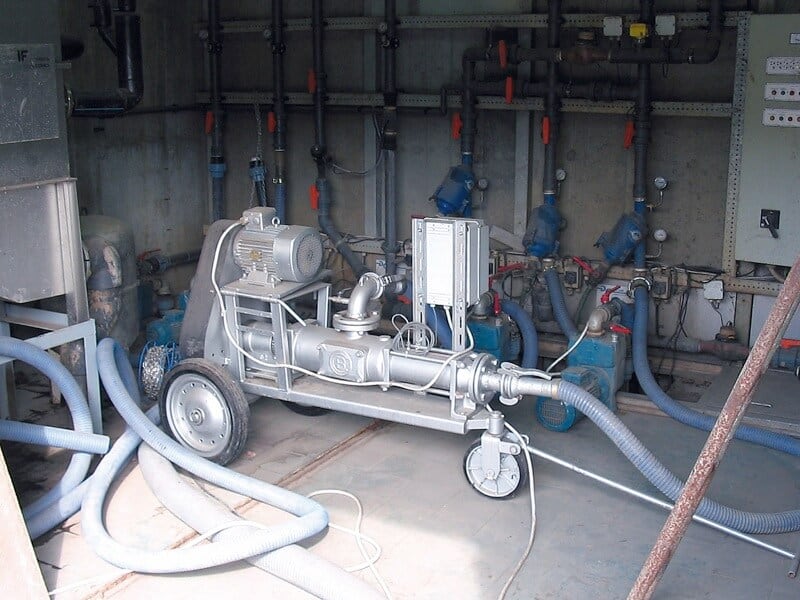
Why are companies increasingly choosing to equip their production lines with screw pumps? The answer lies in a whole range of undeniable advantages.
First and foremost, screw equipment ensures a completely smooth flow without pulsations or surges, which protects pipelines from premature wear. It also demonstrates an amazing ability to handle media of any viscosity, including liquids with a high content of solid and fibrous particles.
A high level of self-priming allows the product to be reliably lifted from great depths, and the precise proportionality between rotational speed and flow rate makes process configuration as simple as possible. At the same time, the pump operates with low noise and vibration levels, consuming minimal energy compared to other types of equipment designed for similar tasks.
Why do Ukrainian manufacturers choose “Dalgakiran”?
Selecting the right screw or auger pump is an engineering challenge. It is essential to accurately account for pressure, viscosity, the presence of abrasives, temperature, and the chemical aggressiveness of the medium. A mistake during the selection phase can result in a production line shutdown or costly repairs.
The industrial company “Dalgakiran” offers a comprehensive partnership approach to support Ukrainian business and the economy:
- Operations throughout Ukraine. The company supplies high-quality equipment and consumables to enterprises in every corner of the country.
- In-house on-site service in 11 regions. Service engineers are always ready to quickly arrive at a facility to perform commissioning, scheduled maintenance, or troubleshooting.
- Energy efficiency and cost savings. Specialists select solutions that help optimize electricity consumption and reduce the cost of finished products.
- Comprehensive customer support. “Dalgakiran” builds long-term relationships with customers, and every partner receives the utmost attention, support, and professional guidance.
Ensure maximum reliability and stability for your production. Contact our company’s specialists. After all, everything works with “Dalgakiran”!