Traditional and upgraded energy grids in Ukraine are increasingly facing imbalances. To overcome this limitation and ensure the energy independence of facilities, energy storage systems are used. These high-tech complexes are capable of accumulating excess electricity during periods of active generation or low cost and then supplying it back to the grid when a shortage or emergency shutdown occurs. In this article, we will take a detailed look at how such systems work and how to choose the right energy storage system for your needs.
What Are Energy Storage Systems?
In fact, an energy storage system acts as a powerful buffer between the power source and the end consumer. In the past, fuel generators were mainly used for emergency power supply, but they are noisy, require constant fuel purchases, and emit exhaust gases. Modern electronic energy storage systems operate quite quietly, switch automatically within milliseconds, and do not require complex maintenance.
Today, the desire to buy an energy storage system is driven not only by the desire to protect equipment from blackouts but also by financial considerations. Thanks to smart management, such systems make it possible to significantly save on electricity bills. They charge at night at the lowest tariff and, during the day, during peak loads, supply the facility with their own energy.
Main Components and Operating Principle of Energy Storage Systems
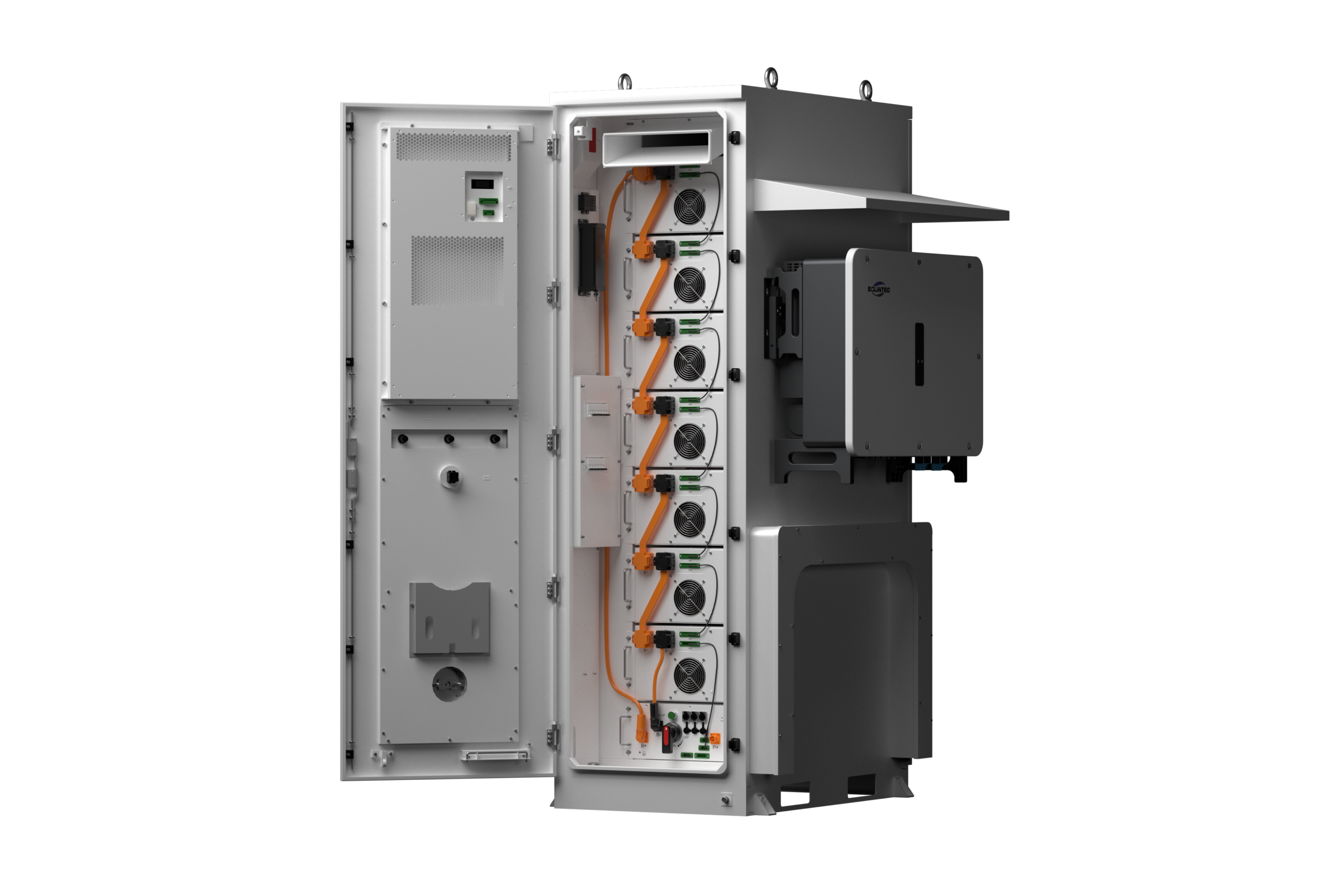
A modern energy storage system is a complex intelligent system. It consists of several interconnected modules that together ensure the safe collection, storage, and conversion of electric current.
Battery Modules
The battery unit is the “heart” of the entire system. Here, electricity is converted into chemical energy and stored until it is needed. Today, lithium iron phosphate batteries (LiFePO4) have become the industry standard. They offer tremendous advantages:
Durability: they withstand from 4,000 to 6,000 full discharge-charge cycles, which is equivalent to approximately 10–15 years of daily operation.
Deep discharge: they can be discharged “to zero” (up to 90–100%) without loss of capacity.
Safety: the LiFePO4 chemical composition is resistant to overheating, and they do not catch fire even in the event of mechanical damage.
Each such unit is equipped with a mandatory BMS board (Battery Management System). It monitors temperature, controls the voltage level of each individual cell, and protects the battery from overcharging or short circuits.
Inverters and Energy Conversion Systems
Since batteries operate exclusively on direct current (DC), while household appliances and the general grid use alternating current (AC), the system requires power conversion equipment. This role is performed by a bidirectional inverter (PCS).
When there is excess electricity in the grid, the inverter takes alternating current, converts it into direct current, and charges the batteries. When the power goes out, the reverse process takes place: the inverter instantly takes direct current from the batteries, converts it into the standard 220 or 380 volts, and powers the equipment. The inverter is controlled by intelligent software that analyzes the state of the grid and consumption schedules and can independently decide which source is currently more cost-effective for obtaining energy.
Advantages of Using Energy Storage Systems
The implementation of energy storage systems provides the owner of a solar power plant or an ordinary facility with a number of critically important advantages, the main one being complete autonomy: you are no longer dependent on the stability of the central grid, line failures, or scheduled outages. An office, house, or production facility continues to operate as usual. In addition, the system allows you to buy cheaper nighttime energy and consume it during the day when the maximum commercial tariff applies.
The speed at which BESS switches to autonomous mode depends on the architecture: Line-Interactive systems have a delay of up to 20 ms, while online systems (with double conversion) guarantee seamless 0 ms switching, which is critical for servers and medical equipment.
When the power goes out, BESS switches to Island Mode — it creates an isolated grid where the inverter (PCS) itself generates an accurate sine wave, stabilizing frequency and voltage.
In normal operation, BESS works in parallel with the grid, performing the Peak Shaving function: it discharges the batteries during the facility’s maximum loads to avoid penalties for exceeding power limits.
Application of Energy Storage Systems in Various Industries
The flexibility of the technology makes it possible to use energy storage systems practically everywhere — from small apartments to large industrial enterprises and government infrastructure facilities.
In the residential sector, the equipment guarantees family comfort: the operation of heating, water supply, internet, and household appliances during emergencies. In the commercial sector (supermarkets, data centers, hotels, medical clinics), such systems protect businesses from financial losses caused by interruptions in work processes or product spoilage. The price of energy storage systems is flexible, depends mainly on capacity, and everyone can choose an option to suit their budget.
Integration with Renewable Energy Sources
Energy storage systems are particularly important for “green” energy. Solar and wind power plants have one major disadvantage — instability. The sun shines brightest during the day, when most people are at work and consumption is minimal. In the evening, when everyone returns home and the load on the grid rises sharply, solar panels no longer generate electricity.
The joint integration of a solar power plant and an energy storage system solves this problem once and for all. During the day, excess kilowatts are not fed into the grid for free or lost but are fully directed to charging the batteries. In the evening and at night, the house or enterprise is powered by solar energy accumulated during the day.
How to Choose an Energy Storage System: What Should You Pay Attention To?
Choosing an industrial or commercial battery energy storage system (BESS / ESS) is primarily about precise technical calculations. In such projects, everything is measured in megawatts (MW) and megawatt-hours (MWh), because even a minor error can affect the stability of the entire facility.
The key parameter is the capacity of the system — it determines how long the BESS will be able to provide power during an outage. For example, if a data center or production facility consumes an average of 1.5 MW, then a system with a capacity of at least 6 MWh will be required for 4 hours of autonomous operation.
Equally important is the power of the inverter section (PCS), which is responsible for the system’s ability to respond instantly to loads. It determines whether the ESS will be able to cover peak consumption and maintain autonomous grid operation. If the system is rated at 5 MW, while the simultaneous startup of equipment requires 6 MW, the automation will simply activate protection.
Therefore, when designing a BESS, a power reserve is always included — usually at the level of 20–30% above the maximum peak load. This is especially important for facilities with high starting currents: industrial lines, pumping stations, compressors, and other energy-intensive equipment.
In addition, scalability and the overall reliability of the equipment should be taken into account. It is better to choose modular systems that allow you, if necessary, to simply purchase and connect new battery units without the expensive replacement of the inverter itself. The final stage of selection should be an analysis of the brand’s reputation, verification of the official warranty, and the availability of an authorized service center in your region.
To ensure that you receive an official warranty and high-quality service, contact DALGAKIRAN. The specialists will help you develop an effective turnkey energy independence project and take care of all further support for the station.
 0800 30 13 77
 0800 30 13 77
 En
En








Відгуків немає, поки що.