Business owners strive to minimize electricity costs by optimizing the operation of electric motors at their facilities. Without proper regulation, most industrial units consume too many resources and suffer rapid mechanical wear. The solution to this problem is the implementation of specialized power equipment for flexible control of current parameters. In this article, we’ll explore how these devices work, their main functions, and their specifications, which will help you improve your business’s energy efficiency.
What Are low-voltage frequency converters
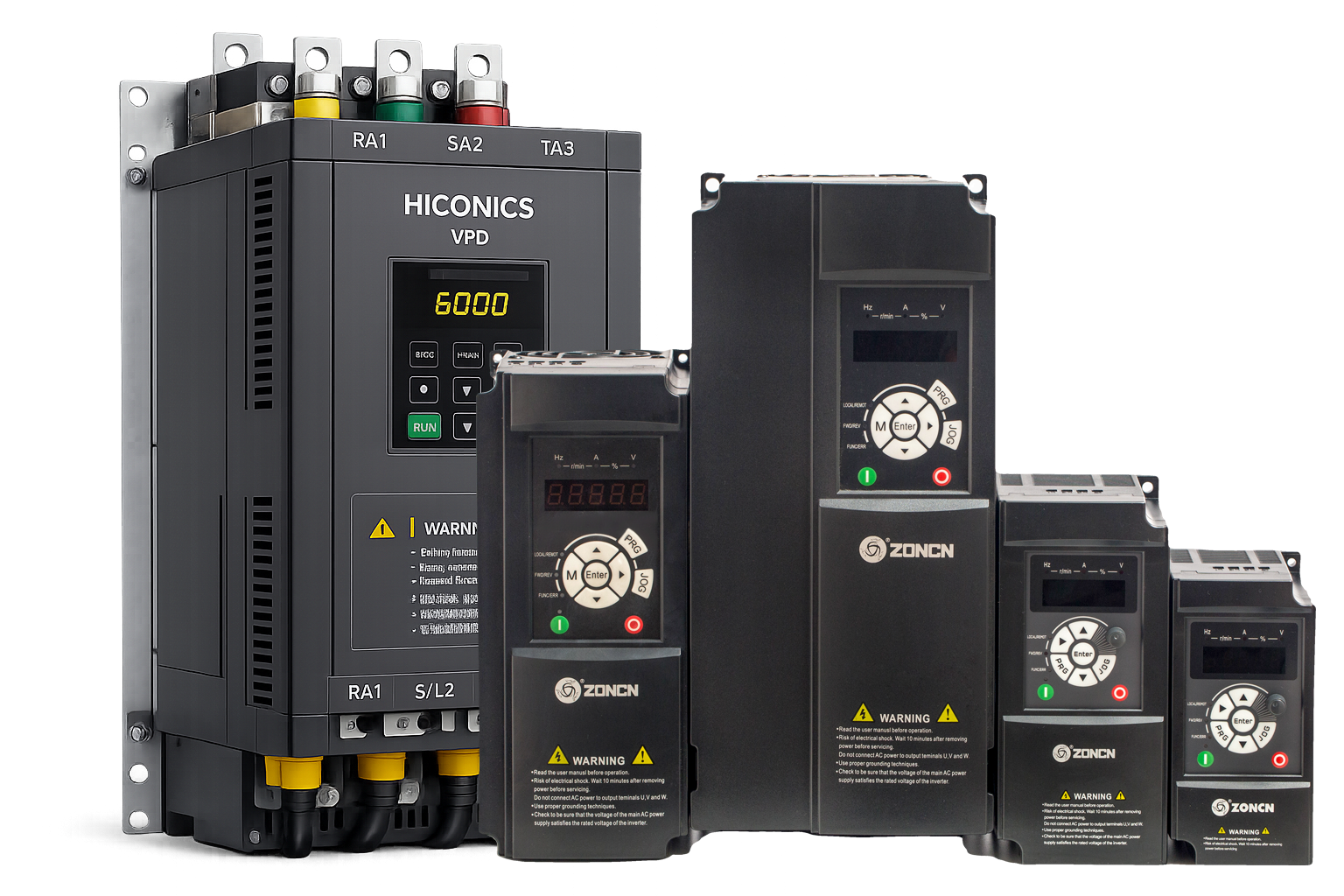
An industrial low-voltage frequency converter is an electronic device for controlling the rotational speed and torque of asynchronous and synchronous electric motors. The term “low-voltage” means that the equipment operates within a standard voltage range of up to 1,000 V, most commonly in three-phase networks of 380 V, 400 V, or 660 V. If your facility requires devices rated for significantly higher line voltages, you can browse our full product range, which features a variety of frequency converters in higher performance classes.
The primary function of these controllers is to automate processes and protect motors from premature failure. They are integrated into control systems for pumping stations, conveyors, ventilation systems, industrial fans, compressors, mixers, and extruders. This makes it possible to move away from outdated methods of mechanically regulating process parameters using valves or throttles, replacing them with precise electronic control of the shaft’s rotational speed.
How low-voltage frequency converters work
A modern low-voltage frequency converter operates according to a classic circuit design with an AC-DC-AC circuit. First, the AC mains voltage at a stable frequency of 50 Hz is fed to the input rectifier, where it is converted to direct current. The energy then passes through the DC link’s capacitive filter, which smooths out ripple and stores charge to stabilize the system.
In the final stage, an IGBT-based inverter converts the DC voltage into an output AC current with adjustable frequency and amplitude using pulse-width modulation. For systems that require exceptionally smooth acceleration and minimization of inrush currents during the startup of heavy machinery without the need for continuous speed control during operation, the catalog also offers soft starters that minimize the load on the power grid.
Advantages of using low-voltage frequency converters
The main reason engineers seek to purchase a low-voltage variable frequency drive is its high economic efficiency. By matching the motor’s speed to the actual load, electricity consumption is reduced by 20–50%. The implementation of variable frequency drives provides a range of benefits:
smooth acceleration and deceleration of drives, which minimizes the risk of water hammer in pipelines and protects gearboxes;
reliable protection of motor windings against current overload, phase failure, short circuits, and overheating;
the ability to integrate into modern automation systems thanks to support for standard industrial communication protocols;
a significant extension of equipment maintenance intervals and a reduction in overall maintenance costs.
To maximize energy savings, variable frequency drives are supplemented with other systems. In particular, facilities install reactive power compensation devices, which relieve cable lines of reactive currents and reduce reactive power consumption from the utility grid.
Main characteristics and parameters
Each frequency converter is selected individually based on the motor’s power and maximum output current. The type of control—scalar or vector (for precise torque control at low speeds)—is also important.
Key technical specifications of low-voltage equipment include:
rated input voltage: three-phase 380–660 V or single-phase 220 V;
output frequency range: standard range from 0 to 400 Hz;
overload capacity: 120–150% of the rated current for one minute;
enclosure protection rating: from the basic IP20 (for cabinet mounting) to dust- and moisture-proof IP55/IP66.
If the equipment is intended for use in harsh outdoor conditions or in open-air locations, engineers use special ready-made container solutions that ensure an optimal microclimate for the operation of electronic components.
Benefits of ordering low-voltage frequency converters from Dalgakiran
The industrial company Dalgakiran offers Ukrainian enterprises high-quality power equipment that fully complies with international standards. Our mission is to promote the development of enterprises across all industrial sectors by enabling them to save money and resources through our products.
By choosing our company, you gain significant advantages:
a wide range of certified devices, while the price of low-voltage frequency converters remains competitive thanks to direct supply;
a comprehensive “turnkey” approach—our specialists perform technical audits, selection, design, professional installation, and commissioning of automation systems;
prompt 24/7 technical support and on-site visits by mobile service teams in 11 regions of Ukraine.
By supplying reliable equipment, we help domestic manufacturers increase their capacity and strengthen Ukraine’s economy—because everything works with Dalgakiran.
 0800 30 13 77
 0800 30 13 77
 En
En






Відгуків немає, поки що.