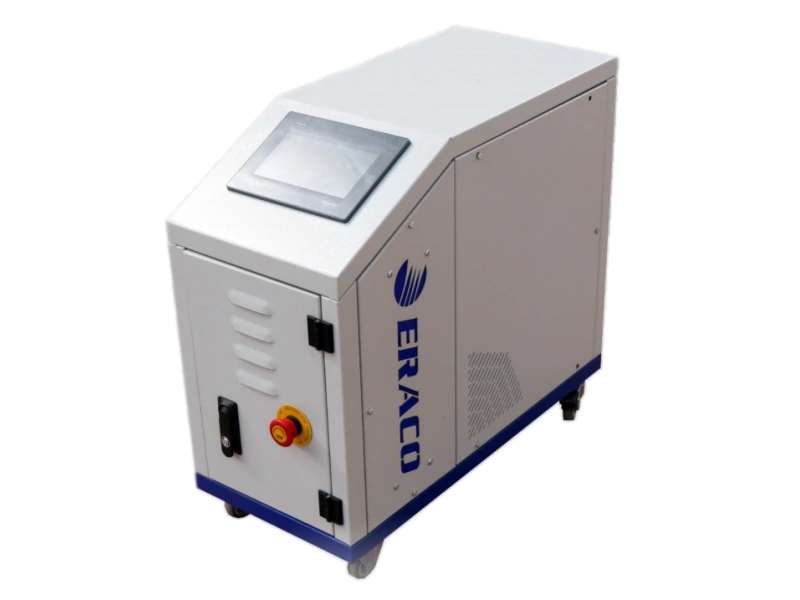
An industrial thermostat is a device designed to regulate the temperature of a heat carrier. In practice, thermostats can deal with three types of coolant: liquid, air, and solid coolant (for example, wax).
Field of application
Thermostats have a wide range of applications in industrial operations. For example, they can be part of a single system with a diesel generator. Thus, compact thermostats installed in a cooling system include a radiator, fan and pump. For large industrial plants and molds, there are “remote mobile” thermostats.
The main purpose of Shini thermostats is to maintain the required temperature of the coolant during the heating and cooling of molding materials. As a rule, water or oil is used as a coolant. The use of thermostats in the molding process allows us to guarantee the maintenance of a precisely set mold temperature, and, accordingly, to ensure high quality of finished products.
Certification
All of our industrial thermostats are certified and meet the highest quality standards. The thermostats presented on the website have:
Certificate of compliance with the requirements of ISO 9001;
Certificate of conformity of UkrSEPRO;
Bureau Veritas certificate of conformity;
Certificate of conformity TÜV.
We also offer certified diesel power plants and turbochargers.
How it works
When the molds are in operation, the working fluid needs to be cooled. The connection is made to the inlet and outlet fittings using hydraulic quick couplings (with the working fluid). The industrial mobile thermostat has the following elements in its design: a pump, a cooling tank with a tubular heater, a solenoid valve, a temperature warning sensor, and a liquid level sensor. Hydraulic lines are connected to the inlet and outlet fittings of the cooler to supply cooling water. The working fluid enters the cooling tank through the inlet connection and is then pumped by a pump (compressor) through a tubular heater to the outlet of the thermostat. During operation of the entire system, the temperature of the working fluid gradually rises and, when it reaches a certain limit, causes the solenoid valve, which is installed behind the inlet fitting of the coolant hydraulic line, to operate. As a result, the cooling tank is filled with water. Thus, the coolant reduces its temperature. The design also includes safety devices: a coolant level sensor and a thermal sensor. Both of these sensors trigger an alarm in the event of a malfunction.
Features.
Our equipment is equipped with only high-quality components, which is manifested in the precise maintenance of the set temperature of the coolant. The presented models differ depending on the heat carrier used and, accordingly, the maximum permissible temperature.
Water-type thermostats are used to increase the efficiency of cooling in the range from zero to 120 C. There are also thermostats in which water is under pressure. In this case, the maximum temperature can reach 240 C. Oil-type thermostats provide precise temperature control in the range from zero to two hundred degrees Celsius. To solve more serious problems, there are high-temperature thermostats with operating temperatures up to 300 C.
How to make a choice?
The best way to choose the right thermostat is to get a direct recommendation from a professional. Our campaign employs highly qualified specialists who will help you choose the right equipment for each specific case. Contact us and you will receive a full range of consulting services. Our consultants will not only help you choose industrial thermostats, but will also be able to answer related questions, such as how to choose a compressor or which diesel generator to buy.
Need a consultation?
Fill out the form and we will call you.
Your region
Request a call
Thank you, your request has been sent. A manager will contact you shortly.
 0800 30 13 77
 0800 30 13 77
 En
En