0800 30 13 77
 0800 30 13 77
 En
En

 Back
BackWhat you need to know about the ‘green’ tariff before installing a solar power system

In Ukraine, homeowners and business owners are planning to install solar power stations not only for their own consumption, but also to sell surplus electricity to the state. It is worth mentioning the ‘green’ tariff here — a mechanism around which new regulations and clarifications are constantly emerging. Below, we’ll explain how it works, what legal requirements apply to solar generation facilities, and whether it’s worth joining the scheme at all in 2026. We’ll also look at alternative options for those who want energy independence without participating in the government scheme.
What is the ‘green’ tariff and how does it work?
The ‘green’ tariff is a government programme under which regional electricity distribution companies purchase electricity generated from renewable sources from households and businesses at a fixed, higher price. The green energy tariff is pegged to the euro exchange rate and is reviewed by the National Commission for State Regulation of Energy and Public Utilities (NKREKP).
The mechanism is simple: during the day, the system generates more energy than the household consumes, and the surplus is automatically fed into the grid via a bidirectional meter.
According to industry experts, it is the predictability of the payments, rather than their actual amount, that makes the ‘green’ tariff a useful tool for long-term household budget planning.
Recent changes to the legislation on the ‘green’ tariff
The Law of Ukraine ‘On Alternative Energy Sources’ remains the key piece of legislation, to which amendments are periodically made.
For instance, the law on the green tariff clarifies the procedures for dealing with private households and energy cooperatives, whilst the NEURC regularly adopts new resolutions regarding the rates themselves. On 12 August 2026, the NEURC approved amendments to the Rules of the Retail Electricity Market, which specify the hours during which generation will be counted under the ‘green’ tariff:
- 1 April – 31 October: 04:00–23:00;
- 1 November – 31 March: 06:00–21:00.
Electricity generated outside these hours is no longer paid for at the green tariff — it is purchased by the supplier at the hourly ‘day-ahead’ market price (DAM). This means that a solar power plant owner’s income now depends not only on the number of kWh generated, but also on the time at which they are fed into the grid.
The volume of electricity recorded for each hour may not now exceed the generating capacity specified in the contract — this has been done to standardise calculations across different households.
The military levy on income from the green tariff has been increased from 1.5 per cent to 5 per cent, causing the total tax rate to rise from 19.5 per cent to 23 per cent. However, the priority right to purchase electricity generated under the green tariff remains in force even under martial law.
It is advisable to check any new legislation or regulations regarding the green tariff directly on the regulator’s website before making any calculations — the figures change more frequently than one might think.
Requirements for installing solar power stations to qualify for the ‘green’ tariff
To be eligible for the purchase of electricity under the scheme, a facility must meet several conditions. These requirements are the same for most private power stations and relate to both capacity and documentation. Let’s look at the main list:
- The capacity of the generating unit must not exceed 30 kW for a private household.
- A bidirectional meter must be installed to record the amount of energy fed into the grid.
- Technical specifications must be obtained from the regional electricity distribution company and a contract for the sale of electricity must be concluded.
- Commissioning the plant in accordance with safety standards and obtaining a certificate of readiness.
Only once these steps have been completed will the regional electricity distribution company begin to credit payments based on the actual kilowatt-hours fed into the grid.
Advantages and disadvantages of connecting to the ‘green’ tariff
The decision to join the scheme should be considered carefully, as there are restrictions alongside the obvious benefits.
|
Advantages |
Disadvantages |
|
Guaranteed feed-in tariff, pegged to the euro |
Power station capacity limit — up to 30 kW |
|
Stable income over several years |
Documentation and approval from the regional electricity distribution company are required |
|
An incentive to develop own generation |
Payments may be delayed in the event of grid arrears |
As we can see, the scheme is suitable for those who are prepared to navigate the bureaucratic process in order to secure a stable income from surplus electricity.
Procedure for connecting a solar power station to the ‘green’ tariff
The connection process itself consists of several sequential steps, and it is not possible to skip any of them. Firstly, you should ensure that the technical design of the plant complies with the regulations — professional solar power plant design will help with this. The procedure then proceeds as follows:
- Submitting an application to the regional electricity distribution company and obtaining technical specifications.
- Assembly and installation of the equipment in accordance with the design.
- Installation of a bidirectional meter by the regional electricity distribution company’s specialists.
- Signing the electricity sales contract and the start of billing.
Dalgakiran supports clients during the solar panel connection phase, taking care of the technical aspects.
Alternatives to the ‘green’ tariff: off-grid systems and other options
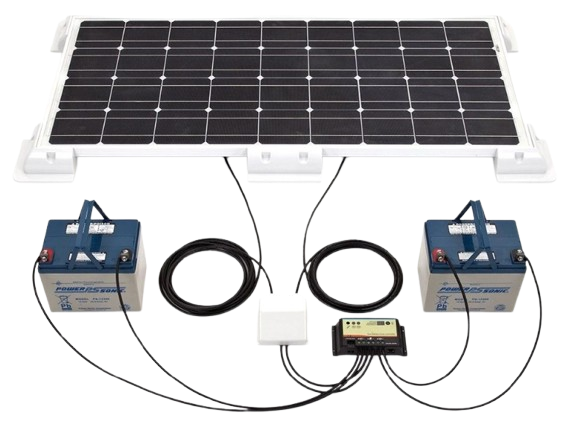
Not all owners wish to sell energy to the state — some opt for complete self-sufficiency. In this case, surplus energy is stored in energy storage systems, and the homeowner then uses their own supply instead of buying electricity from the grid. This eliminates dependence on changes in tariff policy and power cuts, although it requires a larger initial investment in batteries.
Conclusions
The ‘green’ tariff is an excellent option for those who want not only to consume but also to earn money from their own generation. However, changes to rates and regulations occur regularly, so before getting started, it is worth checking the current NEURC regulations rather than relying on last year’s figures. If the priority is energy independence without participating in the government programme, a sensible alternative would be a combination of solar panels and storage systems.
In any case, you should make your decision after consulting our specialists, who are familiar with the current situation on the Ukrainian market.