0800 30 13 77

 0800 30 13 77
 En


 Back
Industrial pumps for the chemical industry: selection criteria
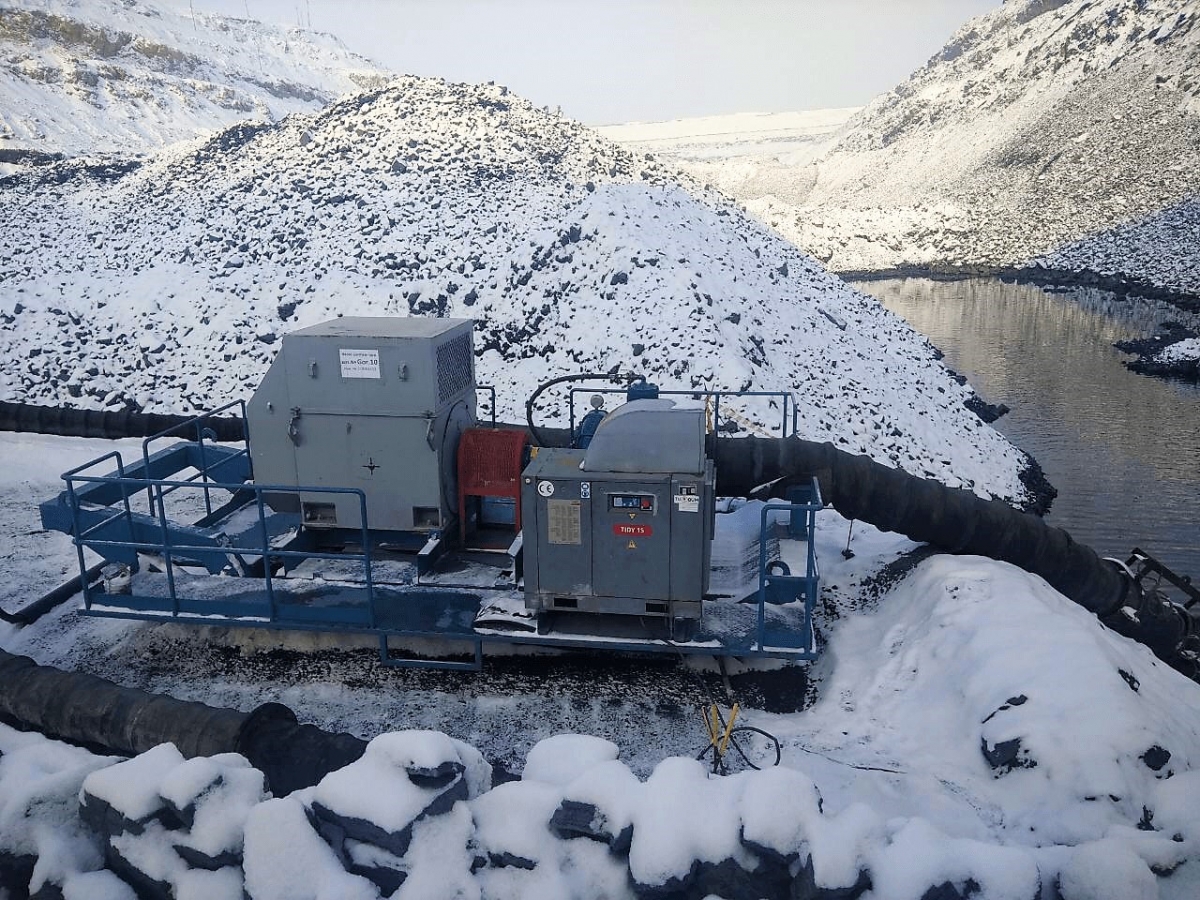
In the chemical industry, there is no room for even the smallest mistakes. Every unit, every connection, and every seal plays a vital role. At the heart of any process chain where reagents, acids, alkalis, or solvents are handled is an industrial pump unit. Its reliability determines not only the continuity of the production cycle but also the safety of personnel and the environmental sustainability of the enterprise. When it comes to pumping aggressive or viscous media, standard equipment simply cannot cope. That is why a properly selected pumping system is the key to ensuring the stable operation of the enterprise.
Dalgakiran fully understands the challenges Ukrainian manufacturers face every day. By providing Ukrainian businesses with reliable equipment, the brand combines high quality, energy efficiency, and affordability. The motto “Everything works with Dalgakiran” is not just a catchy slogan, but a daily commitment to supporting Ukraine’s economy. We offer our own on-site service in 11 regions, ensuring prompt resolution of any technical issues in every corner of the country.
Features of pump operation in the chemical industry
Working with chemicals is fundamentally different from pumping ordinary water or neutral liquid products. The chemical industry places extremely stringent demands on any equipment.
The main challenge lies in the physical and chemical properties of the working medium. The liquid may be highly corrosive, explosive, toxic, highly viscous, or contain a large number of abrasive particles. Each of these factors places an enormous strain on internal components. Corrosion can destroy ordinary metal in a matter of weeks, and even the slightest loss of chamber pressure can lead to a shutdown of the entire line or even a production emergency.
Furthermore, in many industrial processes, the chemical product is pumped at extremely high or, conversely, very low temperatures, which requires the design to have exceptional thermal stability and the ability to maintain seal integrity despite thermal expansion of the materials. High precision in dosing, absence of pulsations, and protection against leaks—these are the key guidelines that engineers follow when designing and selecting such equipment.
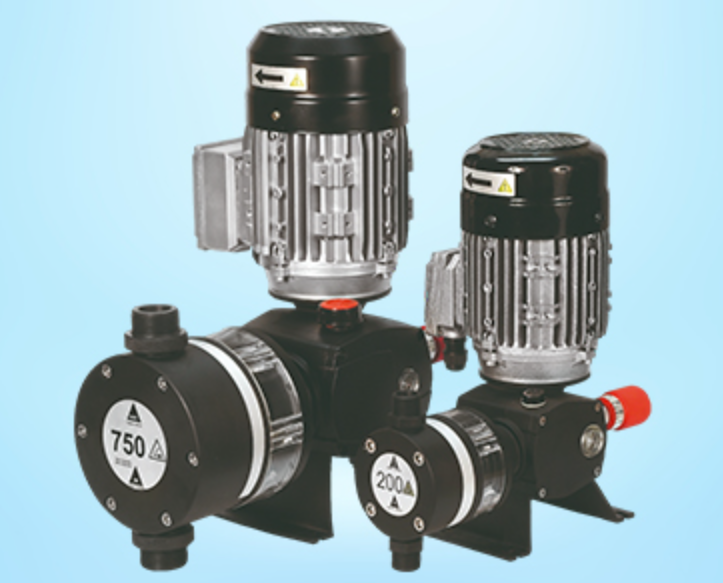
Main types of industrial pumps for the chemical industry
In chemical production, there is no one-size-fits-all unit. Depending on the viscosity, composition, and corrosiveness of the medium, different types of equipment are used.
Centrifugal pumps
A centrifugal pump is a classic in the industrial sector. Its operating principle is based on the transfer of kinetic energy from a rotating impeller to the fluid flow. Under the action of centrifugal force, the fluid is thrown toward the periphery of the housing, creating the necessary discharge pressure.
Sealed centrifugal pumps with magnetic couplings are widely used in the chemical industry. In this design, there are no conventional gland or mechanical shaft seals, which are typically the most common sources of leakage. Torque from the electric motor is transmitted to the impeller through a solid insulating screen via external and internal magnetic assemblies. This ensures that toxic and flammable products remain completely contained within the system.
Screw pumps
A screw pump operates by displacing the working fluid along the axis of the rotor, which rotates inside an elastic stator. The special helical shape of the components creates closed chambers that smoothly move the product from the inlet to the discharge.
This is the optimal solution for pumping high-viscosity substances, adhesives, resins, pastes, and fuel oils, as well as liquids containing solid particles. The screw unit ensures laminar flow without pulsations or turbulence, which is very important for substances that change their structure under shear stress.
Diaphragm pumps
Diaphragm pumps belong to the class of positive-displacement pumps. The product is displaced by a flexible diaphragm that flexes under the action of a pneumatic or mechanical drive, changing the working volume of the chamber. A system of ball valves or valves of other shapes regulates the alternating suction and discharge cycles.
Pneumatic diaphragm pumps are suitable for use in fire- and explosion-hazardous areas, as they do not require electricity to operate—compressed air is sufficient. They are capable of running “dry” without the risk of overheating or damage, and they handle aggressive suspensions and slurries exceptionally well.
Peristaltic and metering pumps
Peristaltic pumps operate by squeezing an elastic hose or tube with special rollers. The product comes into contact only with the inner surface of the hose, without touching any metal components or seals, ensuring maximum hygiene and chemical inertness.
Dosing pump systems (plunger or diaphragm) are designed to deliver a precisely defined volume of reagent with high accuracy. They are indispensable in water treatment processes and for the addition of catalysts, additives, and pH regulators, where an error of even a few milliliters can ruin an entire batch of product.
Key criteria for selecting an industrial pump
To ensure that equipment selection is as accurate and cost-effective as possible, it is important to thoroughly analyze a number of technical parameters before purchasing. Specifically:
- Chemical compatibility and aggressiveness of the medium. It is necessary to consider the exact concentration of the reagent, its temperature, and the presence of any possible impurities.
- Viscosity and density. Centrifugal models are suitable for fluid solutions, while screw or peristaltic systems are needed for viscous mixtures.
- Flow rate and head. An accurate calculation of the required volume of fluid to be pumped per unit of time and pressure losses in the piping.
- Seal type or absence thereof. For hazardous liquids, a sealed pump with a magnetic coupling or a diaphragm design is a priority.
- Temperature conditions. Both the medium temperature and unique environmental conditions are taken into account.
- Explosion protection requirements. Use of appropriate motors or pneumatic drives in high-risk areas.
All these parameters work only in combination; therefore, ignoring even one of them can lead to premature equipment wear or a production line shutdown. A comprehensive approach to analysis allows for the selection of the optimal pump unit, which guarantees long-term, safe, and energy-efficient operation at the facility.
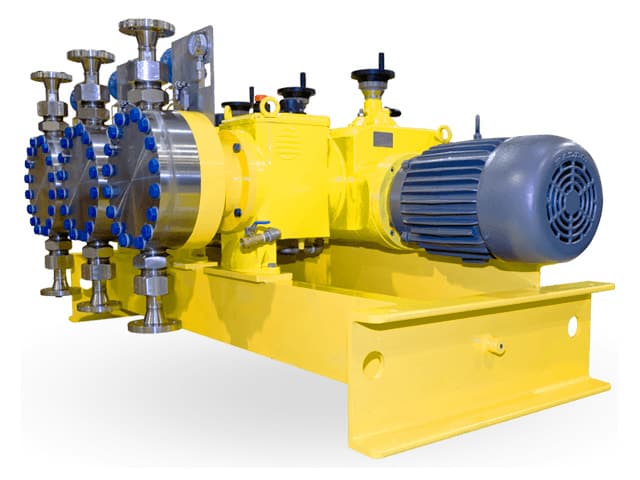
Materials used in the manufacture of pumps for the chemical industry
The service life and reliability of the equipment directly depend on the materials used for its working surfaces. The following materials are widely used:
- Fluoroplastic (PTFE, PVDF): exhibits nearly absolute chemical inertness toward most known acids and alkalis.
- Polypropylene (PP): a lightweight and durable material for moderately aggressive media at moderate temperatures.
- Elastomers (EPDM, FKM, NBR): used in the manufacture of diaphragms, seals, and stators, ensuring elasticity and leak-tightness.
For less corrosive media, special grades of stainless steel (e.g., AISI 316L) are used. However, when working with concentrated acids or chlorine-containing compounds, metal alloys are replaced by modern polymers.
Tips for selecting a pump for the chemical industry
To ensure that equipment operates for a long time, reliably, and without unplanned downtime, it is worth following a few practical recommendations. Such as:
- Do not purchase a unit “with excess capacity” unnecessarily. An overly powerful pump system consumes more electricity and operates outside its optimal operating point, which accelerates wear on components.
- Consider the possibility of dry start-up. If there is a risk of the suction line becoming empty, ensure that the design includes protection or self-replenishment without damaging components.
- Evaluate the total cost of ownership, not just the purchase price. Energy-efficient solutions and the availability of spare parts can save you significant money over the years of operation.
- Choose a reliable partner. It’s important to have not just a supplier, but a team of specialists who will ensure professional selection, commissioning, and warranty support.
Dalgakiran, an industrial company, operates throughout Ukraine, helping domestic enterprises implement effective solutions. The combination of affordable prices, high quality, and energy-saving technologies makes the brand’s products the optimal choice for the chemical industry. Thanks to our in-house service with field teams in 11 regions, our customers can always count on prompt support and uninterrupted operation of their facilities. After all, when professionals take charge—everything runs smoothly with “Dalgakiran”!