0800 30 13 77
 0800 30 13 77
 En
En

 Back
BackHow does a diesel generator work?

When the external power supply fails, the diesel generator takes over the load and keeps the facility running without interruption. To select, maintain and safely operate the unit, it is important to understand how the unit works, what its principle of operation is and which components perform key functions. Therefore, we will cover this topic in more detail.
The principle of operation of a diesel generator
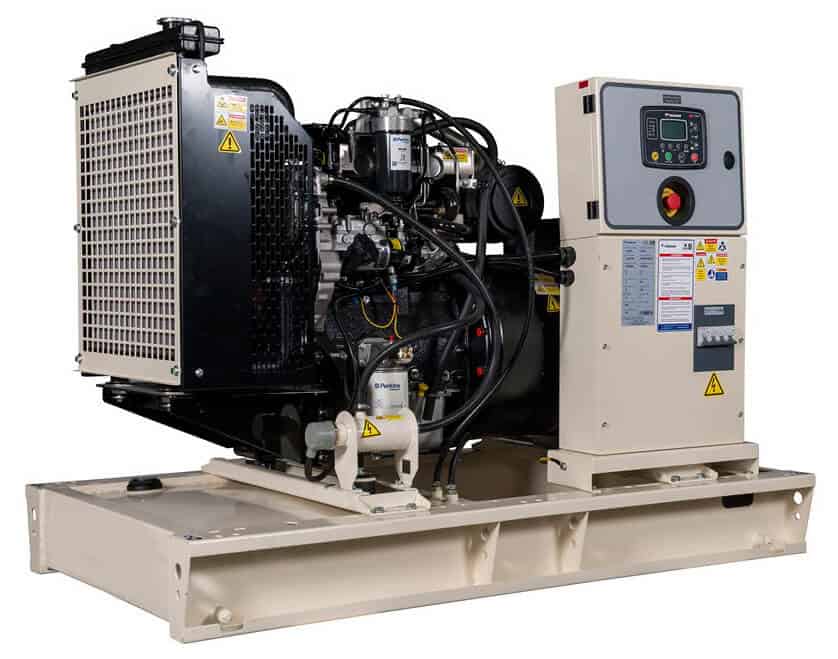
The basic idea is simple. The diesel engine burns fuel, converts chemical energy into mechanical energy, and turns the alternator shaft. In the alternator stator, induction creates an alternating current of the desired voltage and frequency – typically 400 V and 50 Hz in four-pole machines at 1500 rpm. To ensure that the current is stable, the control system keeps two values simultaneously: the frequency through the speed controller and the voltage through the automatic voltage regulator (AVR). This creates a clear operating principle: the engine sets the frequency, the alternator generates electricity, and the electronics smooths out load changes. Two more circuits are critical for the service life: a cooling system that removes heat from the unit and windings, and a lubrication mechanism that reduces friction in sliding pairs.
What exactly keeps the parameters stable during load fluctuations:
- an electronic fuel supply regulator maintains a constant shaft speed during the start-up of pumps, compressors and other inertial loads;
- The automatic voltage regulator (AVR) controls the alternator and compensates for voltage sags when the current consumption increases;
- The cooling system with the required air exchange keeps the motor and windings within the operating range without overheating;
- The lubrication mechanism forms a stable oil film, which directly affects the durability of the crankshaft, camshafts and bearings;
- The control system records frequency, voltage, pressure, and temperature, and triggers protections before deviations become critical.
Thanks to these components, energy is generated without sharp dips, and the resource of the nodes is not “eaten up” by peak modes.
The process of launching and producing energy
Startup and entering the operating mode occur sequentially. First, the unit receives a start command, after which the automation checks the power supply, sensors and readiness of the circuits. Next, the engine is spun up by the starter, the diesel mixture ignites from compression, and the generator starts generating electricity. To avoid overloading the still-cold metal, the load is supplied with a short warm-up delay.
Key stages of installation:
- Startup initiation. When a command is received from the panel or from the redundancy automation, the controller checks the alarm conditions and allows startup.
- Preparing to start. The glow plugs or intake air preheater are switched on, and the fuel pump and injectors are powered up.
- Cranking and ignition. The starter cranks the crankshaft, air is compressed in the cylinders, fuel is injected, and the engine reaches a steady rpm.
- Energy production. The alternator begins to deliver current, the automatic voltage regulator (AVR) pulls the voltage up to the setpoint, and the speed regulator stabilizes the frequency.
- Connecting the load. After a short warm-up, the system supplies voltage to the connected objects.
- Operation under load. The control system monitors frequency, voltage, oil pressure, and coolant temperature, adjusting the fuel supply.
- Cooling and stopping. After the load is disconnected, the motor runs at idle to dissipate heat, and then stops.
This process ensures stable energy production without shock loads on mechanics and electricity, which directly affects the service life and the absence of disruptions for consumers.
Main components of the generator and their role
Let us consider the main components of the generator and their functionality.
Engine
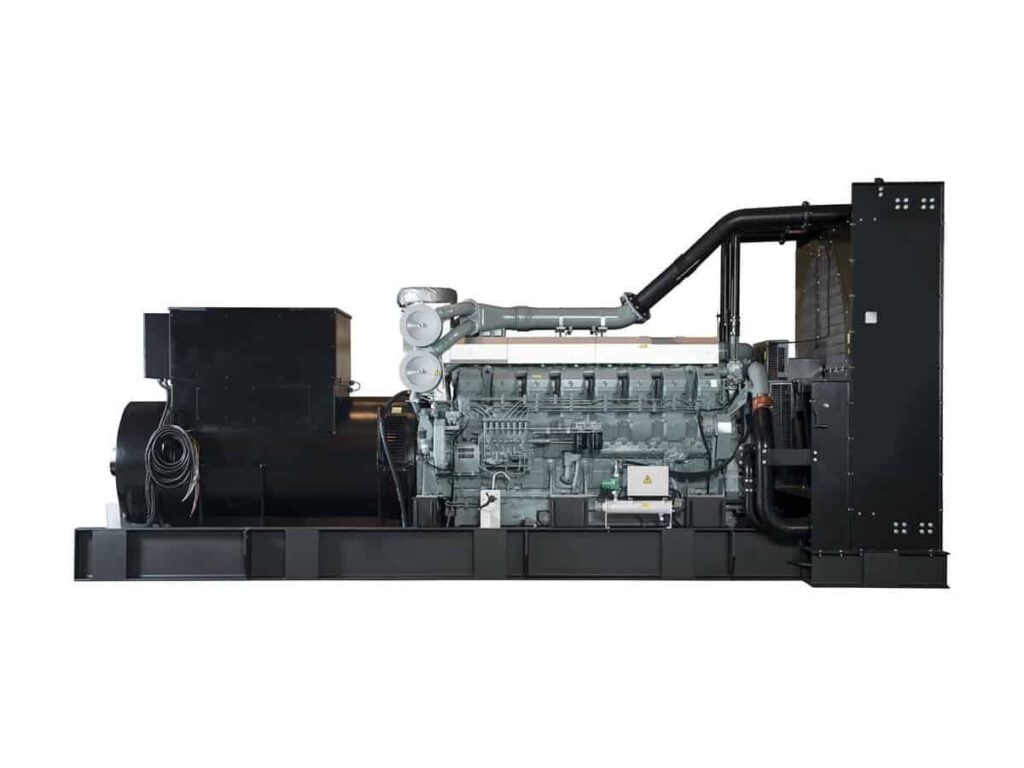
The engine is the heart of the whole complex. Everything else depends on its service life, efficiency and acoustics. The best engines are used in series with a focus on endurance. For example, in the DJ-MS line, Mitsubishi engines are known for their stable operation in hot and cold weather, and in the DJ-PR Perkins line, they are known for their economical consumption under partial load. The engine itself has its own lubrication and fuel supply system.
Alternating current generator
An alternator converts torque into electrical energy. High-quality insulation, temperature margin, protection class, and bearing type are important. Voltage stability and low harmonic content have a direct impact on sensitive electronics at the facility. A good alternator can withstand short-term inrush currents and quickly return the parameters to normal.
Voltage regulation device
An automatic voltage regulator (AVR) maintains the voltage at a predetermined level, compensating for load changes. A proper AVR with a busbar voltage sensor is more accurate than the option “on board” of the alternator, because it sees real sags in the cable route. It is this component that ensures accurate work with electronics where a pure sine wave is important.
Fuel system
The fuel system includes a tank, pump, filtration and injectors. The quality of the fuel and the condition of the filters determine how easy it is to start in cold weather and whether the power output will drop under load. A fuel separator filter (a filter with a water sump) and regular condensate drainage extend the life of the equipment.
Cooling system
A liquid circuit with a radiator, pump and fan maintains the operating temperature. Without reliable cooling, the unit will lose some of its life, and the automation will begin to protect itself from overheating. For long-term operation, proper air exchange and free flow passages are important.
Lubrication mechanism
The lubrication mechanism includes an oil pump, filter and channels. The durability of the friction pairs depends on this. Heating the crankcase in cold regions reduces wear during cold starts and speeds up the reaching of stable parameters.
Control panel
The control panel is responsible for process control, displays parameters and events, and enables remote monitoring. It is convenient to integrate logs, alarms, and control scenarios, such as warm-up before connecting the load and cooling before shutdown. The high-quality panel provides clear diagnostics and quick access to settings.
Charger
The mains charger keeps the battery in working condition when not in use. This is critical for standby systems where the startup must occur on the first try. Regularly checking the battery and terminals prevents wasted time in the event of a failure.
Generator frame
The frame, enclosure or container forms the “body” and determines how easy it is to service components, what the noise level is and whether the site can withstand vibrations. A successful frame has shock absorbers, accessible doors, well-designed ventilation, and space for rigging.
Advantages of using a diesel generator
Compared to other solutions, the diesel kit is more often chosen where long cycles and moderate fuel consumption are required. It keeps the frequency steady, does not lose torque under starting loads, and can handle partial loads if the system is sized with the right margin. In addition, a developed service network and affordable spare parts make operation cost-effective.
If you are considering specific configurations, be sure to check out the range of Dalgakiran industrial diesel generators in our catalog.