0800 30 13 77

 0800 30 13 77
 En


 Back
What Is a turbo сompressor: design and operating principle
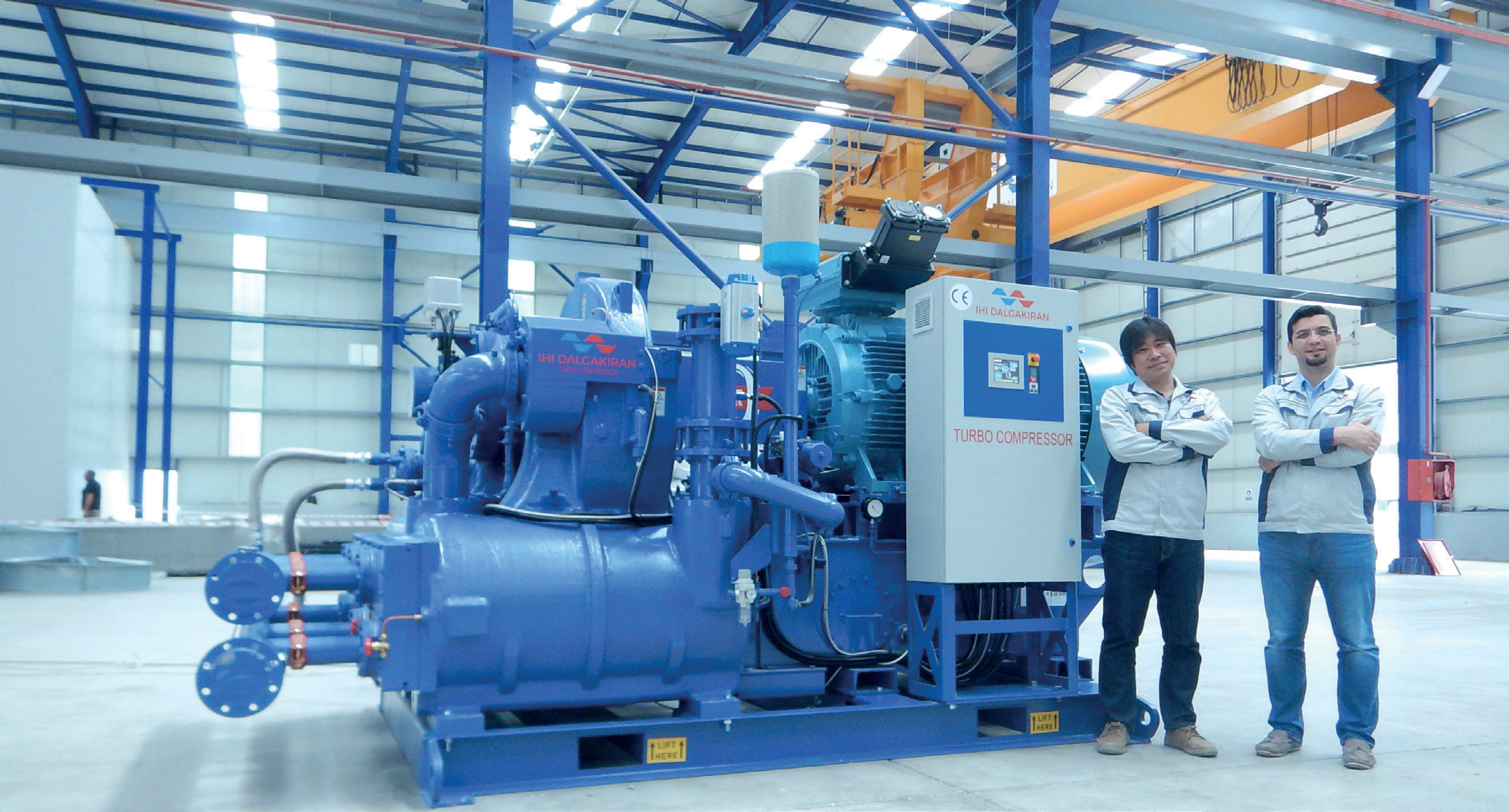
When conventional equipment can no longer meet the needs of a large plant or factory, powerful, high-performance machines are required. At large facilities, compressed air is needed continuously, in enormous volumes, and without even the slightest trace of oil. That is precisely when the need arises for specialized technological solutions, where conventional mechanics give way to aerodynamics. Below, we’ll take a detailed look at how this technology works, what makes it so effective, and how it helps save millions on energy costs.
What is a turbo сompressor and where is it used?
In simple terms, a turbo сompressor is a highly efficient dynamic device that uses kinetic energy to increase the pressure of a gas or airflow. Instead of the usual pistons or screws, it relies on rotational speed and the law of conservation of energy. The easiest way to understand what a turbo сompressor is is by comparing it to positive-displacement machines: it does not trap air in a closed space but accelerates it to supersonic speeds.
This equipment is indispensable for enterprises with high round-the-clock consumption of this resource. Let’s consider why a specific production facility needs a turbo сompressor:
- steel mills, for continuous blowing into blast furnaces;
- the chemical and oil and gas industries, for transporting process gases;
- pharmaceutical and food processing plants, where absolute purity without lubrication is required;
- for machine-building enterprises to power pneumatic systems.
Ukrainian industry is currently actively modernizing its facilities to withstand tough economic challenges. The company “Dalgakiran” supplies modern centrifugal turbo compressors, which help domestic plants conserve resources and maintain a stable pace of operation.
Main components of a turbo сompressor and their functions
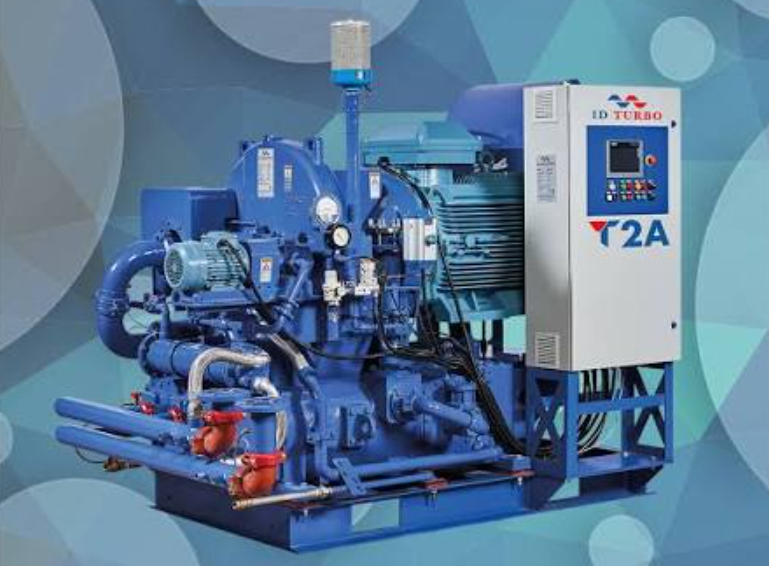
The design of a centrifugal machine resembles a precision watch mechanism, where each element operates with incredible efficiency. The heart of the system is the impeller, with its complex blade geometry, which rotates at tens of thousands of revolutions per minute.
In addition to the impeller, the basic design includes the following components:
- the diffuser itself, where the flow is decelerated and pressure is increased;
- a sturdy housing that collects the compressed air and directs it further;
- intermediate and final systems that cool the flow between stages;
- high-precision automation and integrated monitoring to prevent surging.
The stability of the entire system depends on the manufacturing quality of each component. On an industrial scale, the reliability of components plays a crucial role, since a compressor shutdown means downtime for the entire plant. When the equipment is selected correctly, the system operates without failure for decades.
Principle of operation: accelerating air and converting kinetic energy into pressure
To understand how a turbo сompressor works, it is helpful to refer to the laws of gas dynamics. The airflow enters the axial center of the impeller, which, due to high rotational speed, flings it toward the periphery using centrifugal force. As a result, the air gains tremendous velocity and kinetic energy.
After passing through the impeller, the gas flow enters an expansion channel where the diffuser is located. Here, the flow velocity drops sharply, and kinetic energy is converted into potential energy, increasing the final pressure. In multi-stage models, this process is repeated several times in succession to achieve the desired pressure.
The high performance of such machines is achieved precisely due to the continuity of the flow. IHI-Dalgakiran turbo compressors are a prime example of how engineering ingenuity combines high flow rates with the complete absence of lubrication in the compressed medium.
Advantages and limitations of turbo compressors compared to screw and piston models
The main difference of a centrifugal compressor is the absence of friction between mechanical parts in the compression chamber. This ensures high air purity and a long service life between overhauls. Piston and screw units have their advantages at low and medium capacities, but they are less efficient at high volumes.
The following are among the strengths of centrifugal technology:
- high energy efficiency at a constant base load;
- supply of clean air free of oil contaminants;
- minimal vibration due to the absence of reciprocating motion;
- long service life and relatively simple scheduled maintenance.
However, there are some caveats: this type of equipment requires a high initial investment and has a somewhat limited range of capacity adjustment, while significantly reducing compressed air consumption. If your business requires flexibility to handle fluctuating demand, it is sometimes more practical to consider using a turbo compressor in conjunction with screw compressors; this will ensure the system is as balanced and efficient as possible.
Selection criteria and maintenance of turbo compressors
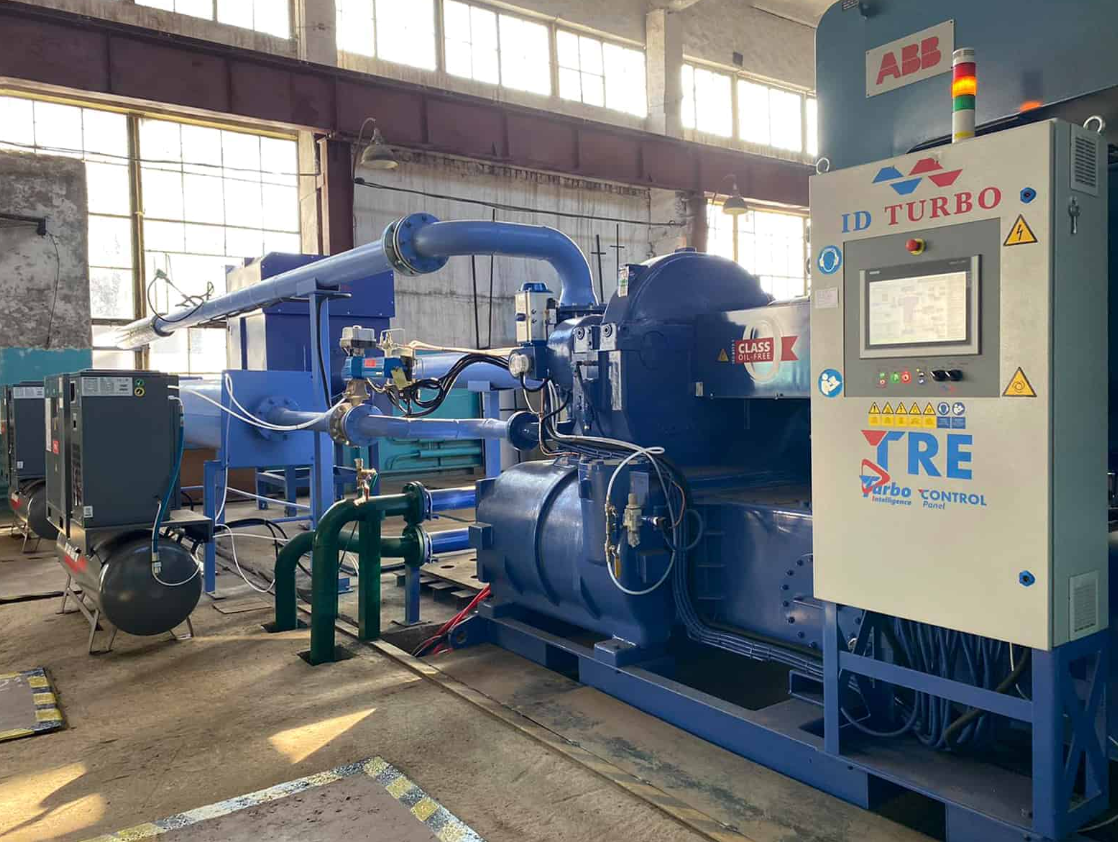
Selecting the optimal capacity begins with an accurate calculation of the facility’s pneumatic balance. It is important to consider peak loads, system pressure, and the region’s climatic conditions, which affect the density of the incoming air.
When selecting an industrial unit, pay attention to the following factors:
- required capacity at maximum operating load;
- availability of modern components, including automation and remote monitoring;
- energy efficiency and specific energy consumption metrics;
- availability of warranty support and the response time of the service team.
Modern control and monitoring systems allow you to monitor the unit’s status in real time, preventing unplanned shutdowns and premature component wear. To ensure prompt service, Dalgakiran maintains a network of 11 branches and more than 70 mobile service teams throughout Ukraine. This enables the company to quickly respond to customer sites in any region, ensuring uninterrupted production.
Conclusions
The implementation of centrifugal compressor stations is a strategic move for large enterprises focused on reducing production costs. The reliability of the compressed air supply directly affects the stability of the entire production line and protects the business from unplanned downtime.
The industrial company “Dalgakiran” provides a full cycle of equipment support: from engineering design to maintenance. Remember that timely maintenance and repair of compressors and other equipment ensure that it retains its factory specifications throughout its entire service life. By entrusting these tasks to professionals, Ukrainian companies receive proven quality—because everything works with “Dalgakiran.”