0800 30 13 77
 0800 30 13 77
 En
En

 Back
BackModern solutions for backup power supply of enterprises
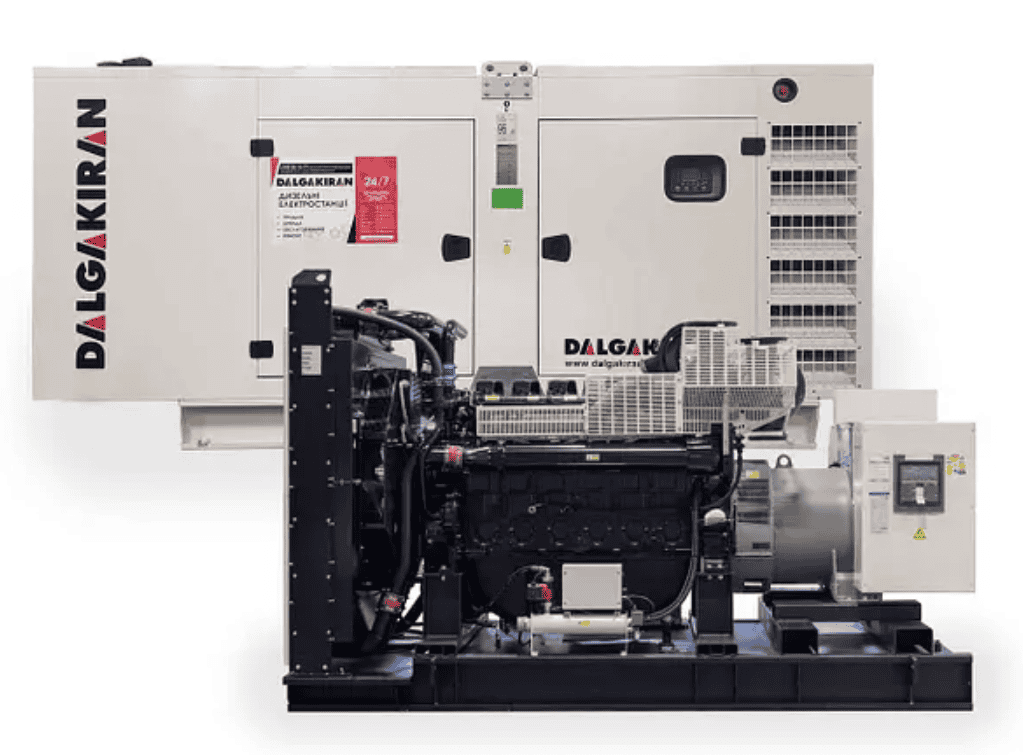
Any enterprise depends on a stable power supply. If the power suddenly goes out, equipment stops working, schedules are disrupted, and direct financial losses occur. To avoid such situations, businesses are increasingly installing backup power systems. These can be generators, batteries, or combined solutions. With these systems, production processes remain uninterrupted even in the event of accidents or scheduled outages.
The importance of reliable power supply for the stable operation of enterprises
A power outage is harmful to almost any business, as it leads to downtime, loss of productivity, and additional costs. This problem is especially acute in the food industry or healthcare, where a power outage can lead to product spoilage or shutdown of critical equipment. The main risks for businesses in the absence of a backup power supply:
- failure of electronics and control systems;
- stopping production lines and technological processes;
- loss of customer confidence due to missed deadlines;
- Increased costs for disaster recovery.
That is why a reliable backup power system is a key factor for the stable operation of any enterprise.
Types of backup energy sources for enterprises
In practice, several types of sources are used for emergency or long-term power supply:
- Diesel generators. The most common solution capable of providing significant power. Suitable for long-term operation, easy to install, and has a long service life.
- Gasoline generators. They are used mostly for small businesses. Less durable, but affordable.
- Gas installations. A modern option that combines efficiency with a lower environmental impact. It is well suited where there is stable access to the gas network.
- Uninterruptible power supply systems (UPS). Provide instant power switching, keeping electronics and servers running. They are used in combination with other solutions.
- Solar panels. An energy-efficient and environmentally friendly solution for a long-term strategy, although it requires significant initial investment.
Each solution has its advantages, and businesses combine different options to achieve maximum reliability.
Advantages and disadvantages of different backup power supply solutions
To choose the most effective option, you need to consider the pros and cons of each type.
|
Type of equipment |
Advantages. |
Disadvantages |
|
Diesel generators |
High power, reliability, long service life |
High noise level, fuel costs, emissions |
|
Gasoline generators |
Affordable price, easy to launch |
Limited motor life, not suitable for long-term use |
|
Gas installations |
Environmentally friendly, lower fuel costs, stable operation |
Dependence on gas networks |
|
Battery systems (UPS) |
Instant switching, protecting servers and critical electronics |
Limited backup time, high price of batteries |
|
Solar panels |
Long-term savings, environmental friendliness, independence from traditional fuels |
High cost of installation, dependence on weather conditions |
There is no one-size-fits-all solution, and each business needs to take into account its scale, budget, and needs.
Automation of backup power source management
An important aspect is the integration of backup systems with modern control systems. Automation makes it possible to:
- monitor load and consumption in real time;
- automatically switch power in case of a mains failure;
- run generators without the participation of personnel;
- control the operation parameters via remote access.
Automation makes backup power supply more reliable, reduces the human factor, and shortens the response time in the event of an accident.
Environmental aspects and resource saving
The issue of energy efficiency and environmental impact is particularly acute today. For business owners, it is important not only to have a reliable source of electricity, but also to use it in accordance with environmental standards.
Modern solutions guarantee the following environmental and economic benefits:
- gas generators produce fewer emissions than diesel generators;
- solar systems do not pollute the environment at all;
- batteries help to reduce peak load and save on tariffs;
- Combined systems provide an optimal balance between costs and stability.
The modern approach to backup power combines reliability, efficiency and environmental care. This is especially important for sustainable development.
Today, having a backup power supply is no longer a matter of choice, but a necessity for any enterprise. The specific solution depends on how large the production is, what budget is available, and what environmental requirements are set. The best result is achieved by combining different sources: generators, batteries and renewable systems. This combination creates an efficient system that ensures stable power supply and continuity of business processes. And investing in modern technologies and automated management will help the company not only protect itself from interruptions, but also save resources and reduce its environmental impact.