0800 30 13 77
 0800 30 13 77
 En
En

 Back
BackLift rental: when it is appropriate
Many industries use specialized lifting equipment. It simplifies installation, repair, and maintenance whenever work at height is required and safety and precision are critical. However, not every company is ready to buy its own lift, as it involves significant costs and ongoing maintenance obligations. In such cases, renting becomes the best solution. This is a practical and economical option that allows you to use modern machines exactly when you need them and avoid additional maintenance costs.
The role of lifts in construction, warehousing and other industries
The lift is used to safely perform work at height and transport materials or personnel. Main tasks:
- providing access at high heights during installation or repair of structures;
- moving heavy loads in warehouses;
- assistance in installing lighting, ventilation systems, advertising, or communications;
- work on the street in the housing and utilities sector – tree trimming, cable replacement, facade maintenance, etc.
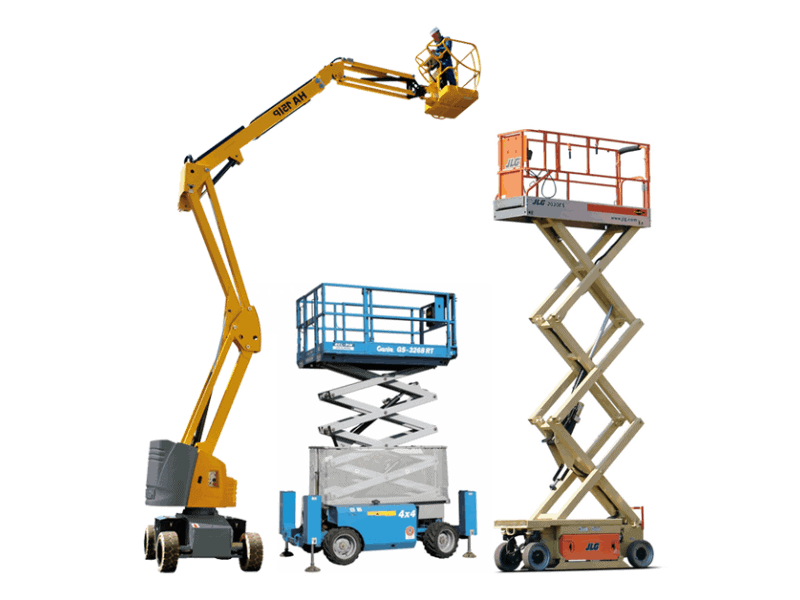
Different types of equipment are suitable for different applications: scissor, crank, telescopic or heavy-duty construction models with high load capacity.
When renting a lift is cost-effective
Purchasing your own equipment is only justified if you need it constantly. If the need arises periodically, renting will be much more economical. Situations when renting is most beneficial:
- one-time or seasonal projects;
- the need for a specific type of lift only for a short time;
- lack of storage space for equipment in the company;
- limited budget of a small or medium-sized enterprise.
By renting, you can avoid large investments and maintenance costs while maintaining access to the necessary resources.
How to choose the right lift for specific tasks
For a rental to be effective, it is important to correctly determine the characteristics of the equipment:
- The load capacity is selected according to the weight of materials or the number of people;
- The working height depends on the specifics of the work (8-12 m is sufficient for interior spaces, while building facades require models up to 30 m and more);
- power supply type – electric models are suitable for warehouses, diesel models for open areas;
- mobility – stationary or mobile units depending on the needs.
For example, indoor warehouses often use scissor lifts with compact dimensions, while construction sites require articulating models with a powerful drive.
Benefits of renting lifts for small and medium-sized enterprises
For small or medium-sized companies, purchasing their own lifting equipment is often too large an investment. Such equipment is expensive, requires storage space, constant maintenance, and qualified personnel. That’s why renting lifts is the best option to get modern equipment without unnecessary financial burdens.
The main advantages for business:
- the company pays only for the actual time of operation, rather than spending significant amounts on purchase and depreciation;
- the company can choose different models depending on the task (for example, a scissor lift is needed for interior work for one week, and a crank lift for exterior installation);
- the equipment is leased in good condition, and all repairs and maintenance are the responsibility of the lessor;
- No need to waste time on tenders, deliveries, or searching for suppliers – just order the model you need;
- rental companies regularly update their fleet of machines, so customers receive reliable and new equipment.
For many small and medium-sized enterprises, renting is also a way to test different types of equipment. This way, they can understand which load capacity and working height are best suited to their needs before deciding on a possible purchase in the future.
It is also important that the rented lift can be used exactly when the need arises, and after the task is completed, the equipment can be returned without storage costs. For businesses with projects of different durations, this scheme is especially beneficial.
This allows small companies to compete with larger market players, as they get access to the same equipment as large corporations, but without large capital investments. As a result, rental is becoming not just a convenient but a strategically important tool for small and medium-sized businesses. This applies not only to the rental of lifts, but also to generators and compressors.
Rental of lifts for special needs
In some cases, companies need non-standard solutions. For example:
- work at particularly high heights that require telescopic models;
- projects for the installation of heavy metal structures, where maximum load capacity is important;
- repair or maintenance in rooms with narrow aisles where compact electric lifts are required;
- short-term operation of equipment for urgent tasks.
In such cases, rental companies offer a large selection, and the client can quickly find the right type of equipment without wasting time on purchases.
Bottom line.
Lift rental is an effective tool for businesses, especially when equipment is needed irregularly or for a specific project. It provides access to modern models, helps save money, and maximizes the benefits of operation without additional costs. For construction companies, warehouses, or service providers, it is a profitable solution that combines flexibility and practicality. “Dalgakiran Compressor Ukraine offers a wide range of scissor and articulating boom lifts for rent.