The rapid development of renewable energy and the steady rise in tariffs for conventional electricity are prompting owners of private homes and commercial premises to seek effective ways to optimise their costs. The grid-connected inverter has become the key component for building cost-effective solar power stations. This device forms the technological core of a conventional solar power station (SPS), which operates in synchronisation with the country’s national electricity grid. Below, we will examine in detail how these grid-connected inverters work and which option is right for you.
What are grid-connected inverters?
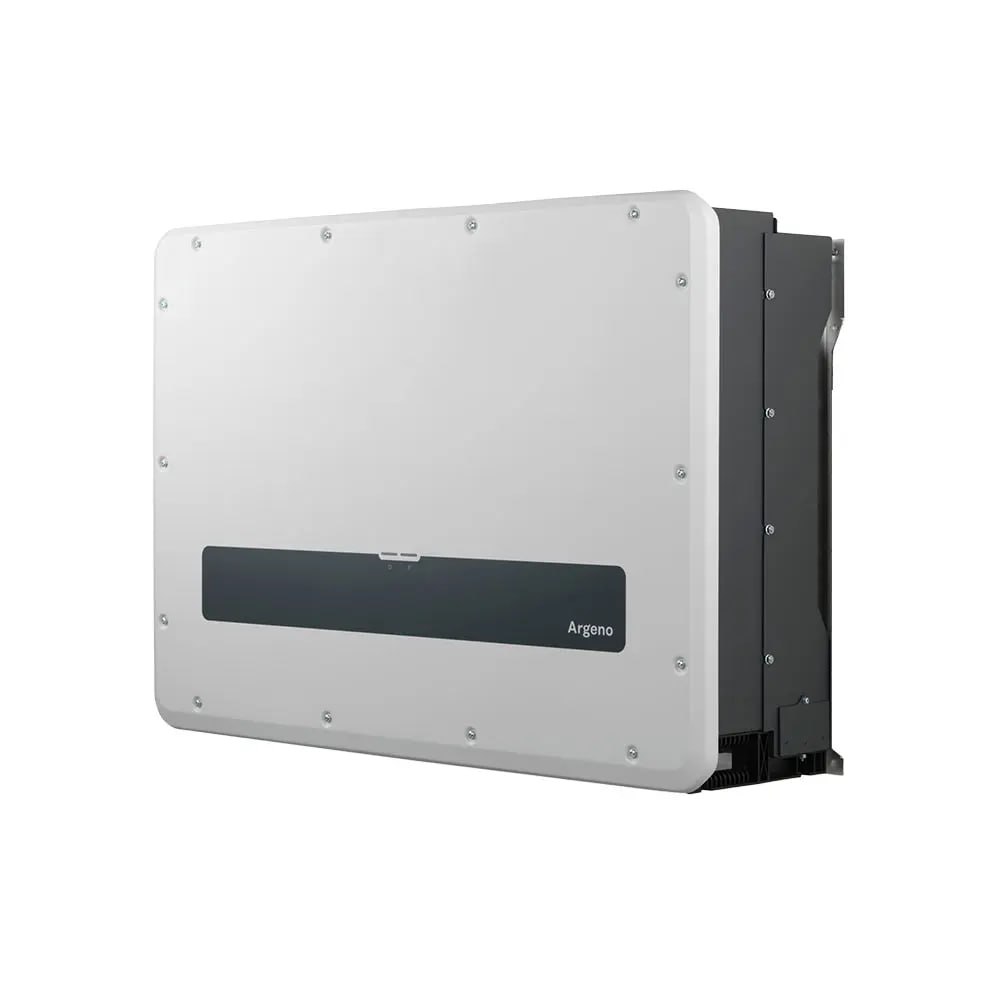
Put simply, a grid-connected solar inverter is a smart energy converter. Its main function is to take the direct current (DC) generated by solar panels when exposed to light and convert it into alternating current (AC) with a pure sine wave, a frequency of 50 Hz and a voltage of 220 V or 380 V. This is precisely the type of electricity required to power any domestic appliances, lighting, or office and industrial equipment.
Grid-connected inverters are designed to operate without the use of batteries. They integrate fully into the site’s existing power system. Modern grid-connected inverters do not simply convert the current; they act as a smart controller that instantly assesses the amount of energy generated by the sun and the level of consumption within the building.
How grid-connected inverters work
The system operates on the principle of prioritising self-consumption. In the morning, the solar panels generate direct current, and the grid-connected inverter immediately converts this into alternating current and directs it to power your appliances (household appliances or equipment).
If there is plenty of sunshine and a surplus of energy is generated, the device either feeds it back into the mains grid (for example, via a net metering scheme or a ‘green tariff’) or, thanks to a smart meter, simply limits generation. When it is cloudy outside or evening falls, the inverter seamlessly supplements any shortfall in kilowatts from the mains supply without you even noticing.
Key specifications of grid-connected inverters
Before purchasing a grid-connected inverter, you should study its technical specifications in detail. The efficiency and service life of the entire system depend on several fundamental characteristics:
Rated output power (kW). This determines the maximum amount of alternating current the device can feed into the grid. It can be single-phase (220 V, usually for systems up to 5 kW) or three-phase (380 V, for systems from 5 to 30+ kW).
Number of MPPT trackers. MPPT (Maximum Power Point Tracking) is a technology for finding the maximum power point of a solar array. Having several independent trackers (particularly two or more) allows solar arrays located on different sides of the roof (for example, east and west) or at different angles to be connected to a single inverter, thereby optimising overall power generation.
Maximum input current and voltage (DC). These parameters limit the number and power rating of solar panels that can be combined into a single circuit (string). Modern devices are optimised to work with new high-power panels rated at 500 W and above.
Of course, efficiency is also important, although today it is almost identical across all manufacturers. For trusted global brands, this figure stands at 97.5%–98.5%, ensuring minimal energy loss during current conversion.
Advantages of using grid-connected inverters
Grid-connected solar power plant architecture remains the most popular worldwide thanks to a number of significant advantages. These include:
Minimal system cost. As the equipment operates without expensive and temperamental batteries, the initial investment in building such a solar power plant is several times lower than in the case of off-grid or hybrid systems.
Fast payback period. Thanks to the ability to sell surplus electricity back to the grid via the Net Billing system, the project’s payback period is minimal and usually ranges from 3 to 5 years.
High reliability and durability. The electronics in grid-connected devices operate in a stable mode without the significant pulse loads characteristic of battery charging. The service life of such devices easily reaches 15–20 years.
Most modern models have built-in Wi-Fi modules or internet interfaces. This allows the owner to use a mobile app from anywhere in the world to see how many kilowatts the station is generating right now and how much money it is saving.
How to choose a grid-tied inverter for a solar power station?
To ensure your investment yields maximum returns, the selection of equipment must be based on precise engineering calculations. You shouldn’t buy a device ‘on a whim’.
Firstly, the inverter’s power rating must precisely match that of the solar array. However, there is a subtle nuance here: virtually all high-quality devices allow the direct current (DC) input to be overloaded by 20–50 per cent. This means that you can safely connect solar panels with a total capacity of 12–13 kW to a 10 kW inverter. This is advantageous, as solar panels only operate at peak output for a few hours a day under ideal summer conditions, whilst in overcast weather or during winter, this margin will help the inverter operate at optimal power.
Secondly, choose brands with a proven track record and official after-sales support in your region. Market leaders use reliable components and offer a direct manufacturer’s warranty of between 5 and 10 years.
When making your choice, be sure to check the cooling type. High-power three-phase units may have active cooling (with fans) or passive cooling (a large aluminium heat sink). Passive cooling operates completely silently and is more reliable, as no dust enters the housing and there are no moving parts that could fail. However, such units require correct installation in a cool, well-ventilated room.
Installation and maintenance of grid-connected inverters
System installation is a job for professionals, as the equipment operates at dangerously high voltages (up to 1,000 V). The unit is mounted on a concrete or brick wall in a dry room (or outdoors under a canopy), and must be connected to protective circuit breakers to guard against short circuits and lightning strikes.
Grid-connected inverters are extremely low-maintenance. All you need to do is check the heat sink for dust every few months and monitor power generation via a mobile app. If there is a power cut, the smart device will automatically detect the fault and send a notification to your smartphone.
A grid-connected inverter is a reliable piece of technology that will last for years. It is the simplest and quickest way to optimise your costs, significantly reducing your utility bills from the very first day the system is up and running.
Відгуків немає, поки що.
Будьте першим, хто залишив відгук на “Grid-connected inverters” Cancel reply
Delivery across Ukraine:
Courier (by our company)
Pick up yourself, or we will organize delivery throughout Ukraine.
 0800 30 13 77
 0800 30 13 77
 En
En







Відгуків немає, поки що.