Diaphragm pumps (diaphragm, pneumatic) are self-priming units equipped with a pneumatic drive, which are currently one of the most popular and versatile on the market. They are characterized by a simple operating principle and a high degree of design reliability and are designed to pump liquid media with various chemical and physical properties, including aggressive, viscous, contaminated, toxic and radioactive ones. This is the reason for the widespread use of this type of unit in many industrial and domestic areas where it is necessary to pump small, medium and large volumes of media with high quality and fast.
The main areas of application of diaphragm pumping equipment:
chemical industry: pumping alkaline, acidic, phosphorus-containing compounds, emulsions, suspensions, powders, reagents, liquid detergents, etc. (the choice of pump casing and diaphragm material is made depending on the pumped medium);
Food industry: pumping various types of food products of liquid and viscous consistency, including those containing solid inclusions – beverages, syrups, caramels, liquefied concentrates, pastes and jams with soft and hard inclusions, yogurts, chocolate, soups, etc;
pharmaceutical industry: pumping liquid, powdered and narrow dosage forms requiring a high degree of purity, as well as pharmaceutical production waste;
paint and varnish industry: pumping explosive, aggressive and abrasive liquid media of various viscosities, including those with solid inclusions, such as paints, polishing pastes, enamels, varnishes, solvents, acetone, drying oil, grouts, etc., as well as waste products from paint and varnish production;
mining industry: pumping abrasive liquid media, including those with solid inclusions – sludge, slickers, waste mine water, glazes, etc;
water supply, water treatment and sewage systems: dosing and pumping of reagent media, pumping of clean and contaminated liquids, feces, etc;
agriculture: pumping processed agricultural products and their waste, irrigation, watering, fertilizer spraying, etc;
printing industry;
oil refining industry;
glass production.
Diaphragm pump design
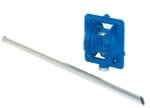
The design of a diaphragm pump is extremely simple: it is equipped with two air chambers, two working chambers and two diaphragms. The membranes separate the working and air chambers in each pair. In turn, each of the membranes is firmly clamped by two support plates and fixed on a common rod. The rod with the membranes moves back and forth under the influence of the air drive, which alternately fills the right and left air chambers. The spool located in the air valve redistributes the air due to its movement. The working chambers are equipped with two check ball valves – they are designed to automatically control the pumping of liquid media inside the diaphragm pump. The compressed air is supplied to the air valve, where it passes through a system of channels and enters (depending on the position of the spool) the right or left air chamber. Under the influence of the increasing pressure in the air chamber, the diaphragm bends, and the pumped medium is pushed into the discharge pipe. At the same time, the second diaphragm bends towards the center of the pump, sucking in another volume of liquid. To prevent backflow and ensure that the chambers are filled evenly, the check ball valves open and close alternately. When the stem with the membranes moves to the extreme point, the spool of the air valve shifts to the opposite position to the previous one, preparing the unit for a second cycle from the other side. It should be noted that the volume of the pumped liquid medium directly depends on the volume of the working chamber.
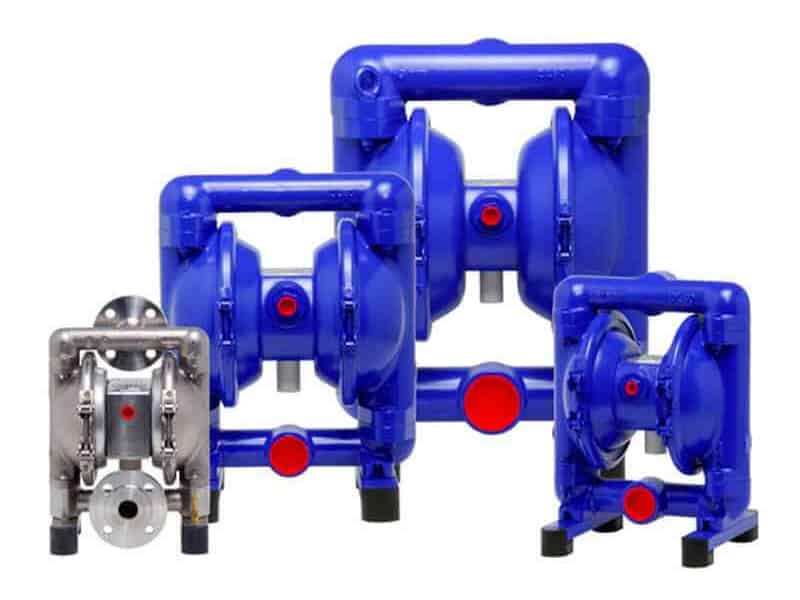
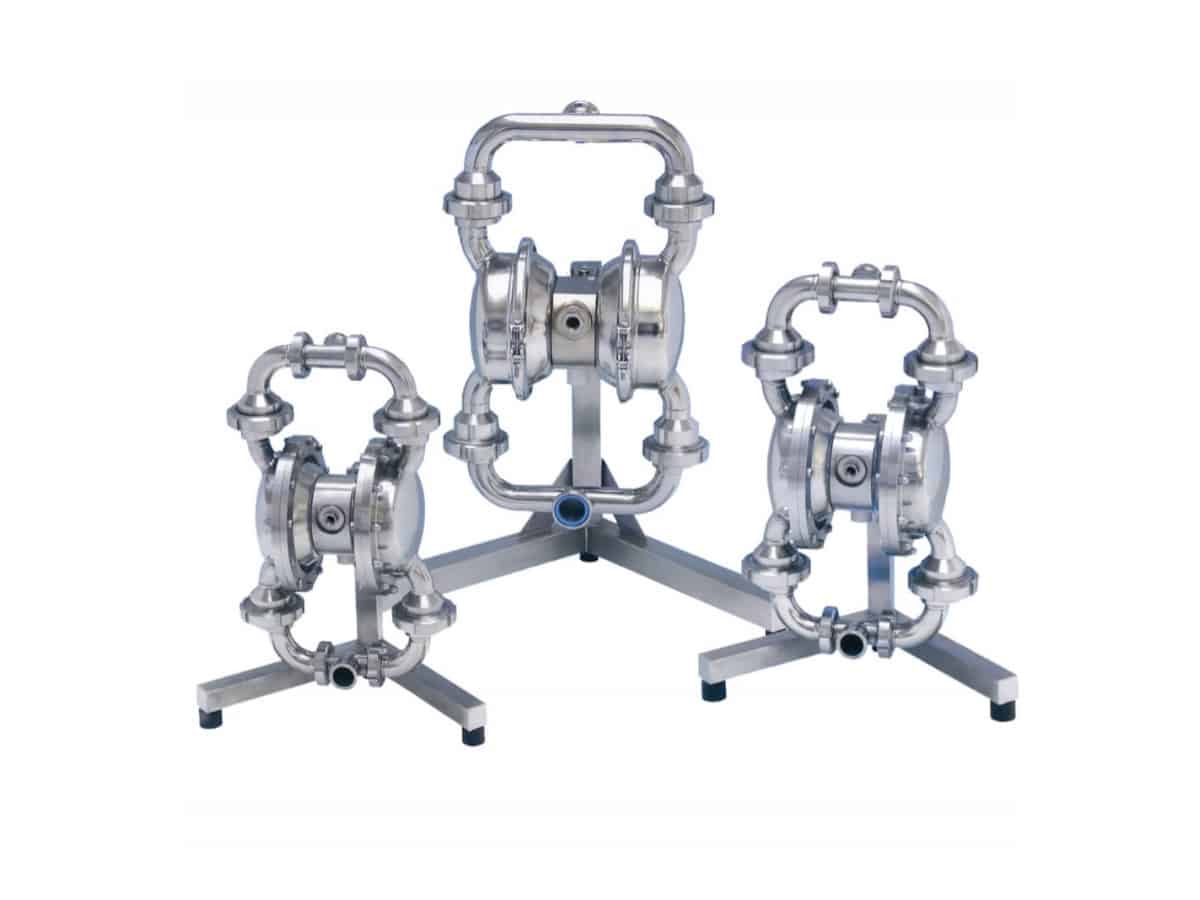
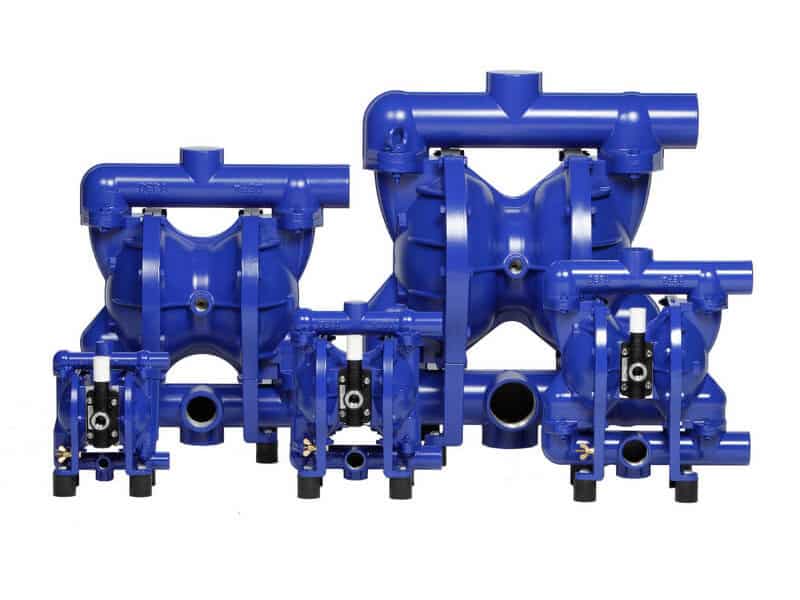
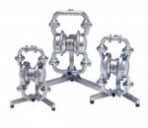
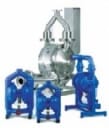
All diaphragm pumps are divided into steel, aluminum and plastic, depending on the material of the flow part and casing. Steel diaphragm pumps are highly resistant to corrosion and provide the necessary sterility to the pumped liquids, which is why they are used in the food and pharmaceutical industries. Aluminum pumps prevent viscous liquids from sticking to the flowing part and are used in the chemical and mining industries, agriculture, cosmetics and printing. Plastic diaphragm pumps are made of Teflon, polypropylene, polyethylene, etc., they have high chemical resistance and are used in pharmacology, chemical and oil refining industries, etc.
Advantages of diaphragm pumps over other types of pumps
If you are looking to buy a diaphragm pump, pay attention to its main advantages:
easy installation, operation and maintenance;
the ability to quickly install anywhere;
compactness of diaphragm pumps;
long-term uninterrupted operation of the pump without repair and lubrication work;
high efficiency with low energy consumption;
a wide range of construction materials and accessories;
high degree of wear resistance and safety of the diaphragm pump;
the ability to pump liquid media with a dynamic viscosity of up to 50,000 mPa to a height of up to 80 m;
dry operation of the unit without risk of damage;
minimal impact on any pumped liquids;
reliable tightness that meets all the requirements and standards of hygiene when pumping sterile, as well as toxic, corrosive, etc. media;
Unlike other types of pumping equipment, diaphragm pumps have an extremely simple and reliable design, with no gland and mechanical seals, electric motors, lubricants, bearings, rotating parts, or base plates;
the ability to change the performance of the unit by changing the air pressure;
the ability to operate with the outlet valve closed without reducing the service life of the membrane;
easy and smooth adjustment of the fluid flow rate;
minimal compressed air preparation and economical air consumption;
environmentally friendly operation of the membrane unit;
safe operation of this type of pump in explosive atmospheres;
the ability to operate the pump submerged in the pumped liquid;
self-priming ability in the filled and empty state;
the possibility of using as dispensers (when connecting a pulse sensor);
No localized heating points due to the absence of rubbing parts in the design, which means there is no risk of damage to individual links and pump parts;
possibility of safe pumping of toxic, highly abrasive, corrosive, gas, radioactive media, as well as highly contaminated liquids (up to 90% of solid inclusions, up to 50 mm in size and more) due to high chemical resistance of the casing and its tightness;
leakage of the pumped medium through the casing is possible only in case of its destruction.
Disadvantages of diaphragm/diaphragm pumps:
The higher the abrasiveness of the liquid, the higher the wear resistance of the membrane;
in case of damage to the membrane due to constant cyclic deformation or other reasons, leakage of liquid media and seepage of liquids beyond its space is possible;
constant monitoring of the technical condition of the membrane and check valves at the inlet and outlet of the chamber for their timely replacement and to avoid an emergency with the unit.
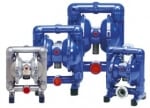
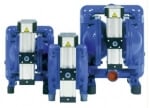
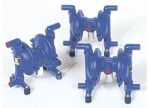
Dalgakiran offers DEPA diaphragm pumps (Germany, CRANE Co.) on the Ukrainian market. If you need to buy a high-quality pneumatic pump, please contact us by phone listed in the contact information, or use the order form or contact an online consultant. Our specialists will select the best solution based on your tasks.
Відгуків немає, поки що.
Будьте першим, хто залишив відгук на “Diaphragm Pumps” Cancel reply
Delivery across Ukraine:
Courier (by our company)
Pick up yourself, or we will organize delivery throughout Ukraine.
 0800 30 13 77
 0800 30 13 77
 En
En







Відгуків немає, поки що.