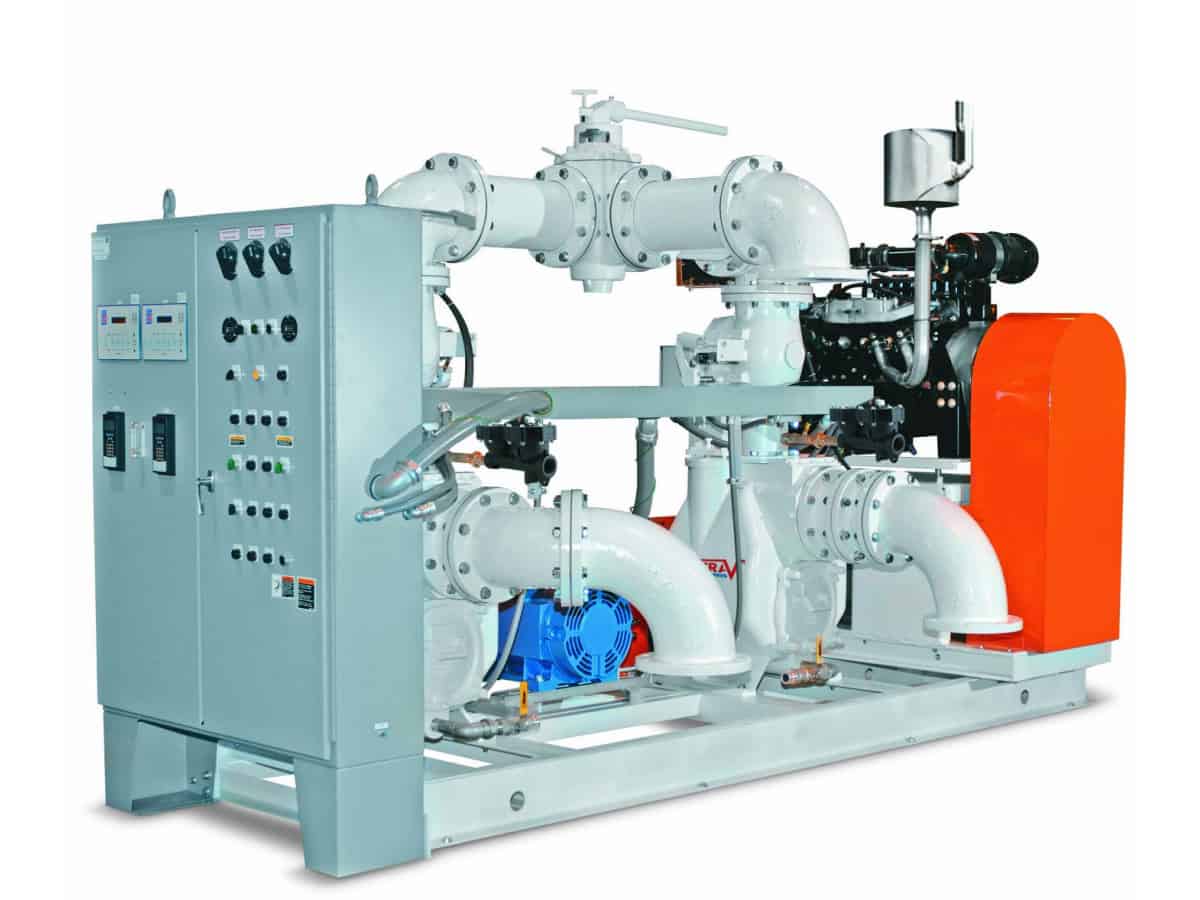
What role do pumps play in a water treatment system? One of the most important. It is the pumps that determine whether water will pass through the membranes at the required pressure and whether the system will achieve the required level of purification. In this article, we’ll look at the different types of pumps available and why choosing the right equipment is no minor matter. We’ll also explain where you can buy reliable equipment in Ukraine.
The role of pumping equipment in reverse osmosis systems
Reverse osmosis is a water filtration technology in which liquid is forced under pressure through a semi-permeable membrane. The pressure determines how effectively the membrane retains dissolved salts, heavy metals and other contaminants. Without a pump, the system simply won’t work — the water won’t have sufficient pressure to pass through the membrane element.
In domestic systems, pumps with pressures of up to 8–10 bar are typically used. In industrial water treatment systems, this figure can reach 60–80 bar or higher, depending on the degree of mineralisation of the feed water and the system’s capacity.
‘A carefully selected pump is half the battle when it comes to the success of the entire reverse osmosis system. Even the most expensive membrane will not deliver results if the pressure in the system is unstable,’ notes the expert.
How the choice of pumps affects water treatment efficiency
The system’s performance depends directly on how consistently the pump maintains the operating pressure. If the pressure drops, the membrane cannot filter out contaminants quickly enough. If the pressure is too high, the membrane wears out more quickly.
Key parameters to consider when selecting a pump for reverse osmosis include:
The operating pressure must be suitable for the type of membrane.
Flow rate (litres per hour or cubic metres per day).
Housing material (chemical resistance).
Drive type — electric or pneumatic.
Noise level and the ability to adjust the speed.
For industrial installations in the food or pharmaceutical sectors, it is also important to take into account the hygiene requirements for the equipment and the possibility of disinfecting it.
Types of pumping equipment for water treatment systems
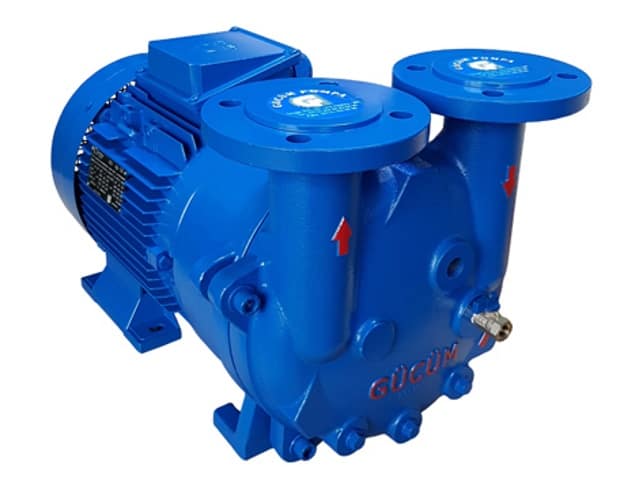
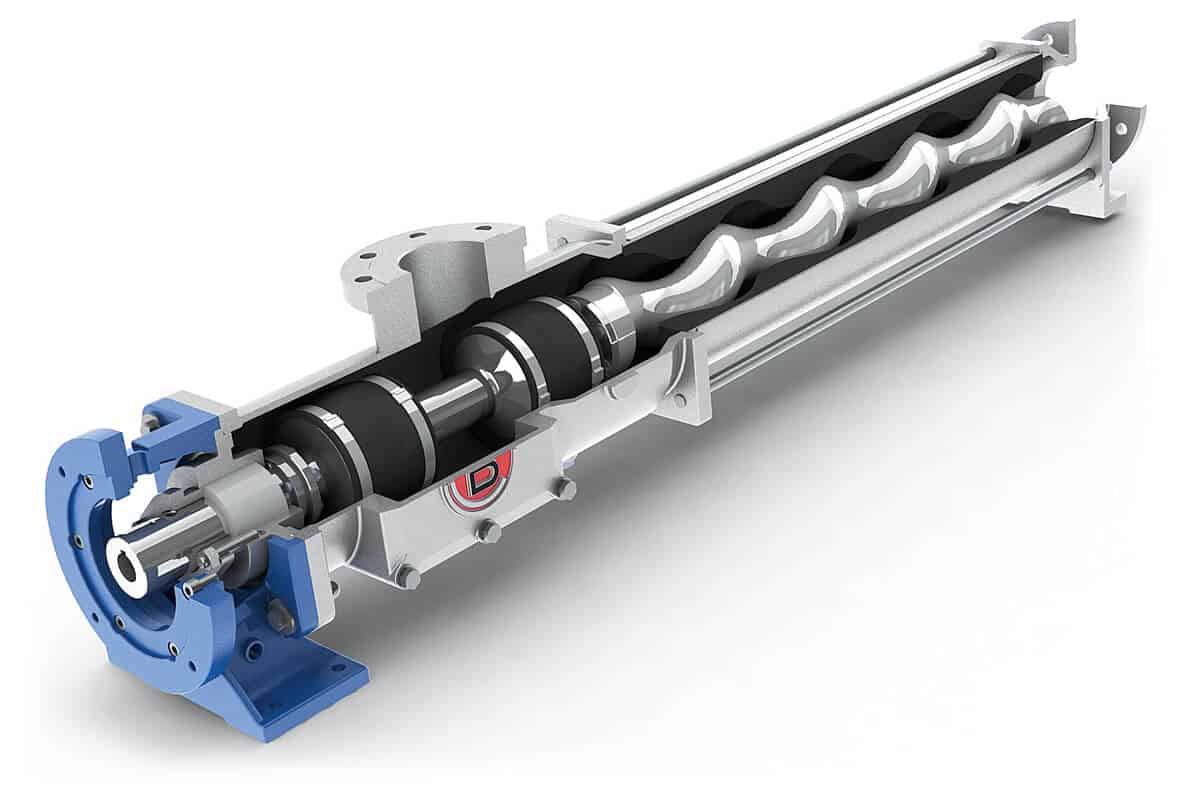
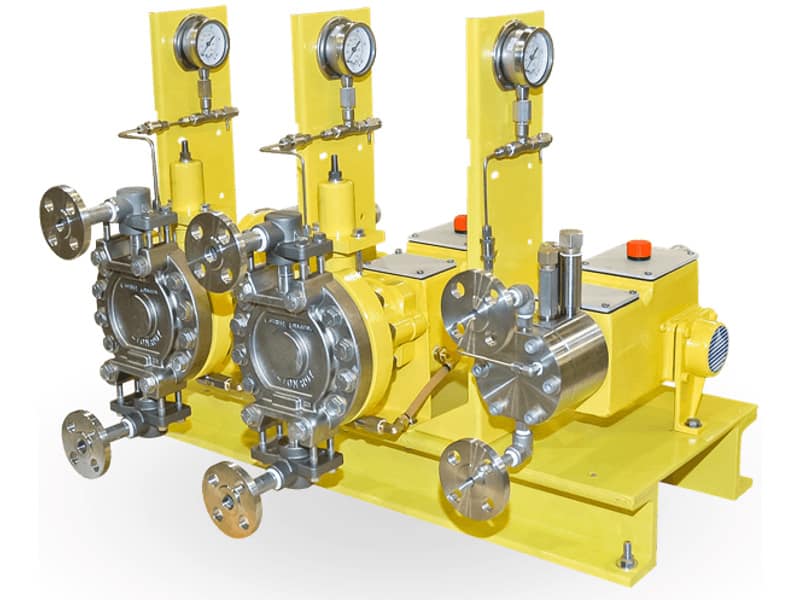
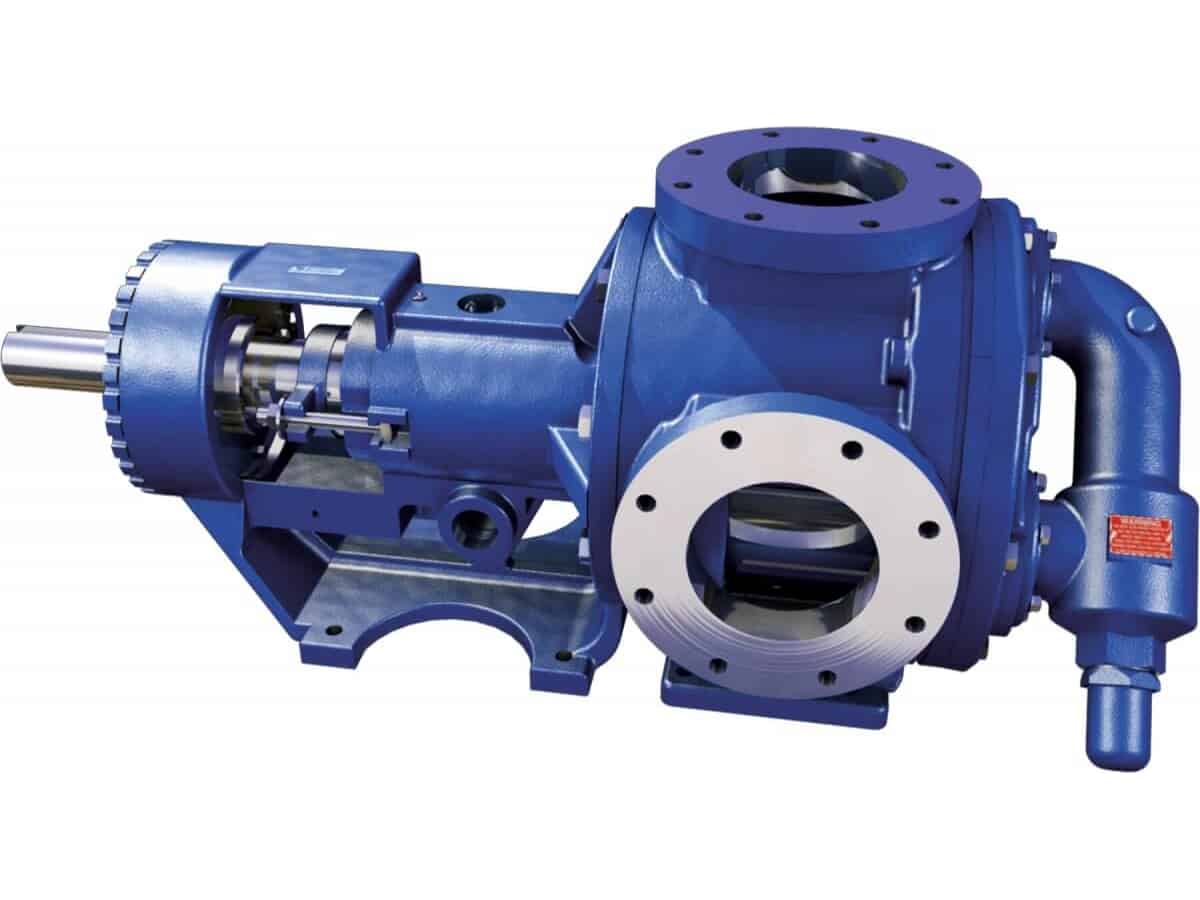
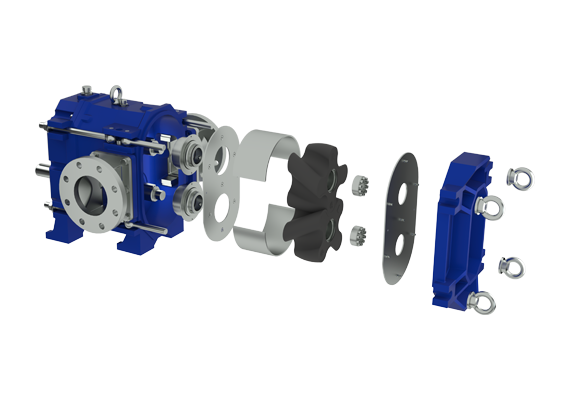
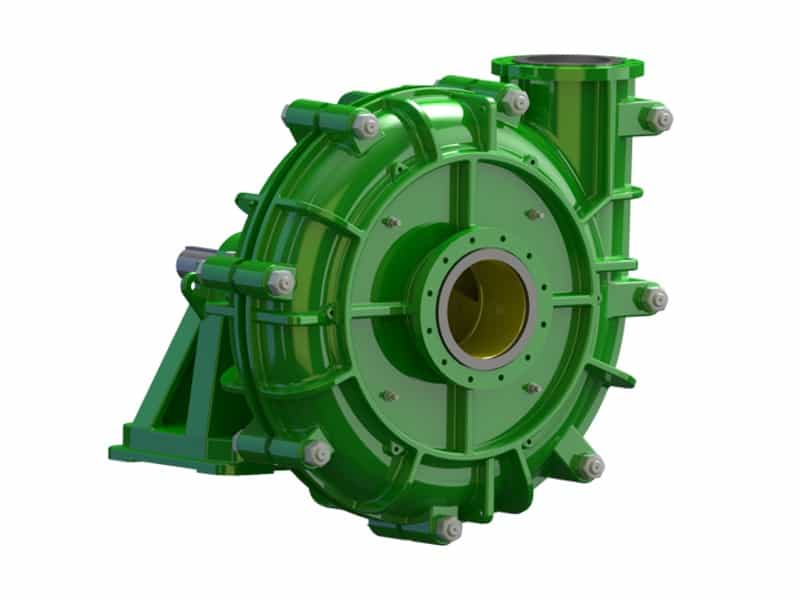
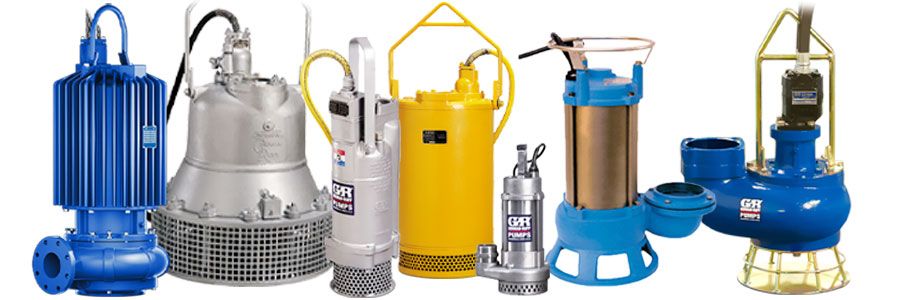
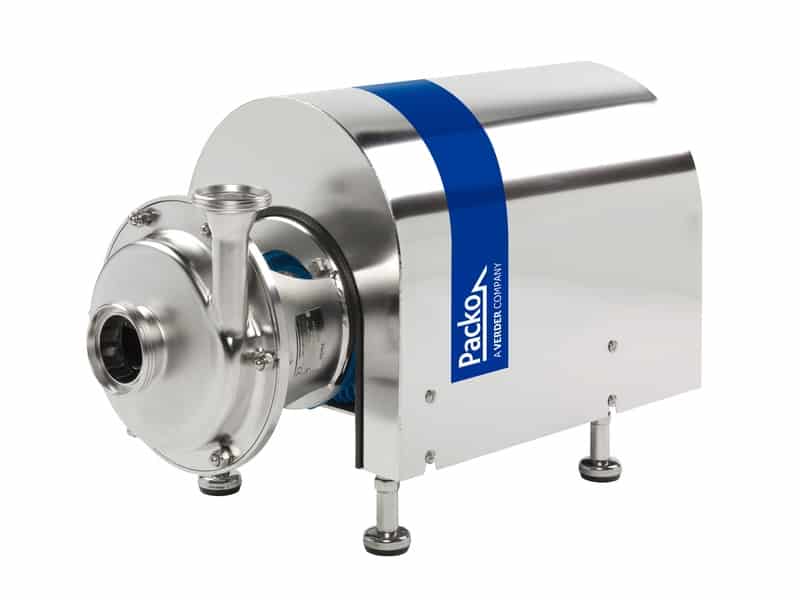
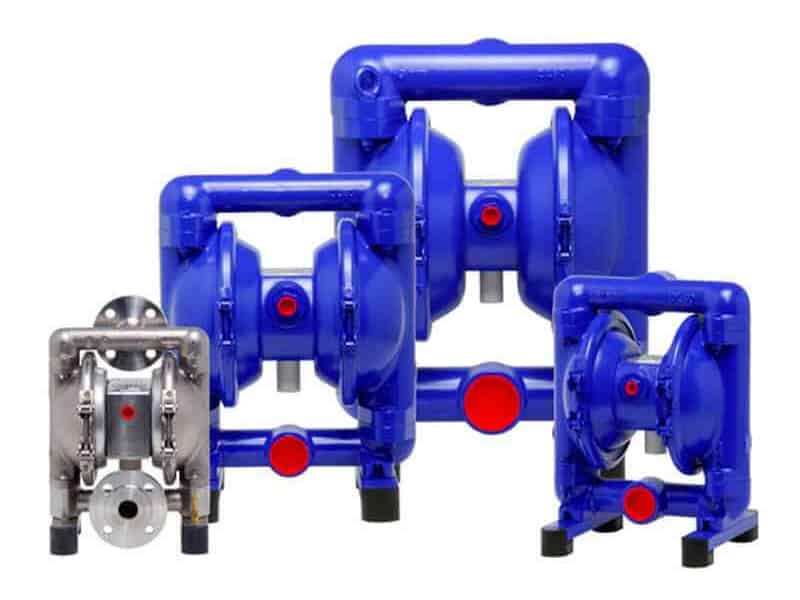
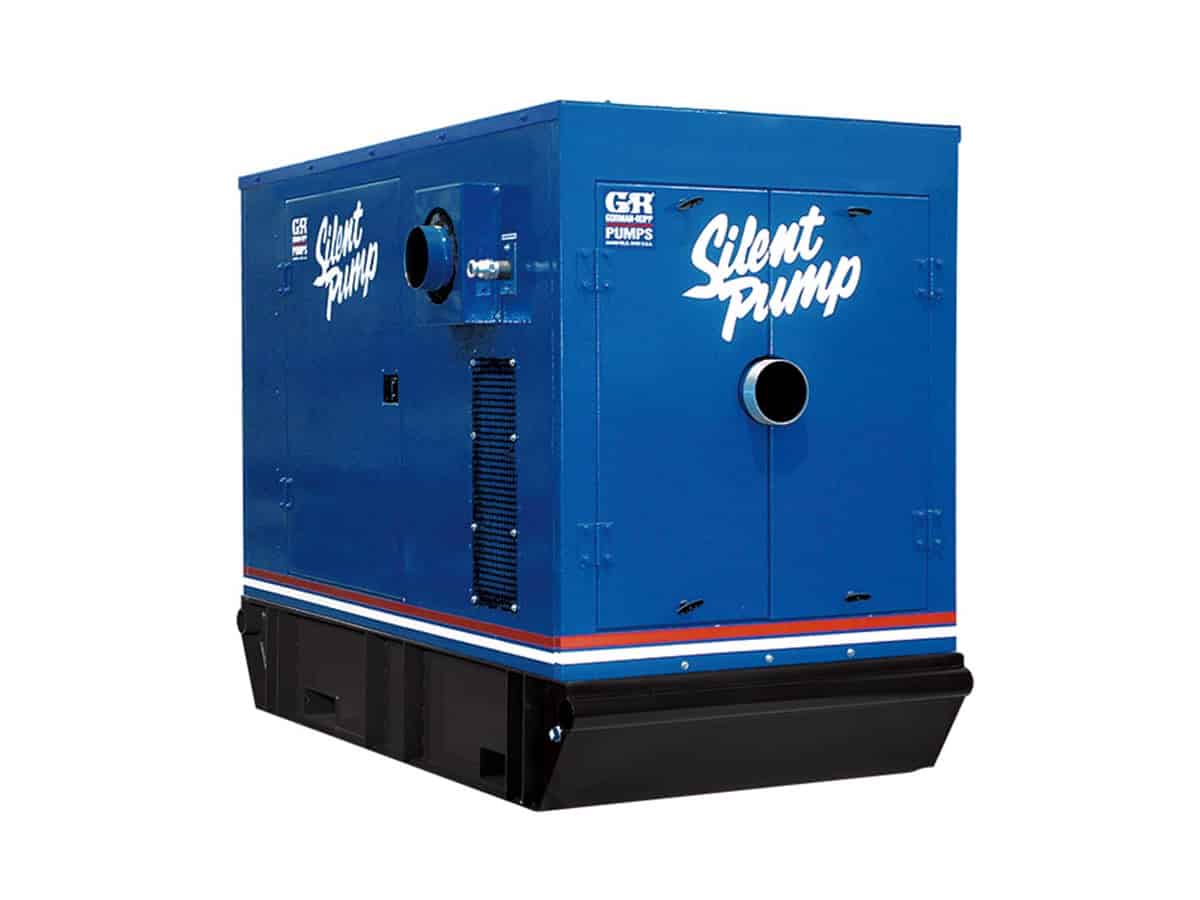
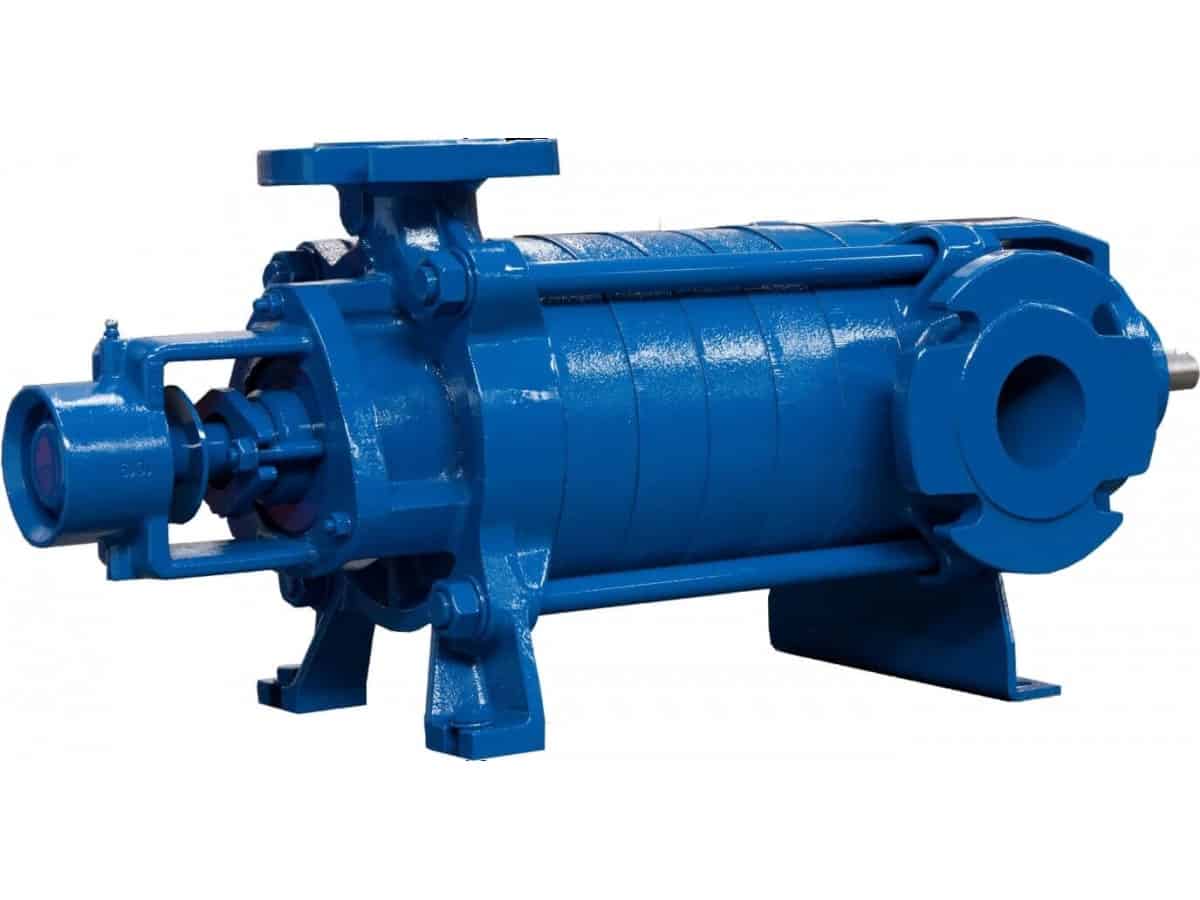
Reverse osmosis pumping systems are divided into several categories depending on their operating principle and field of application. A comparison of the most common types is given below:
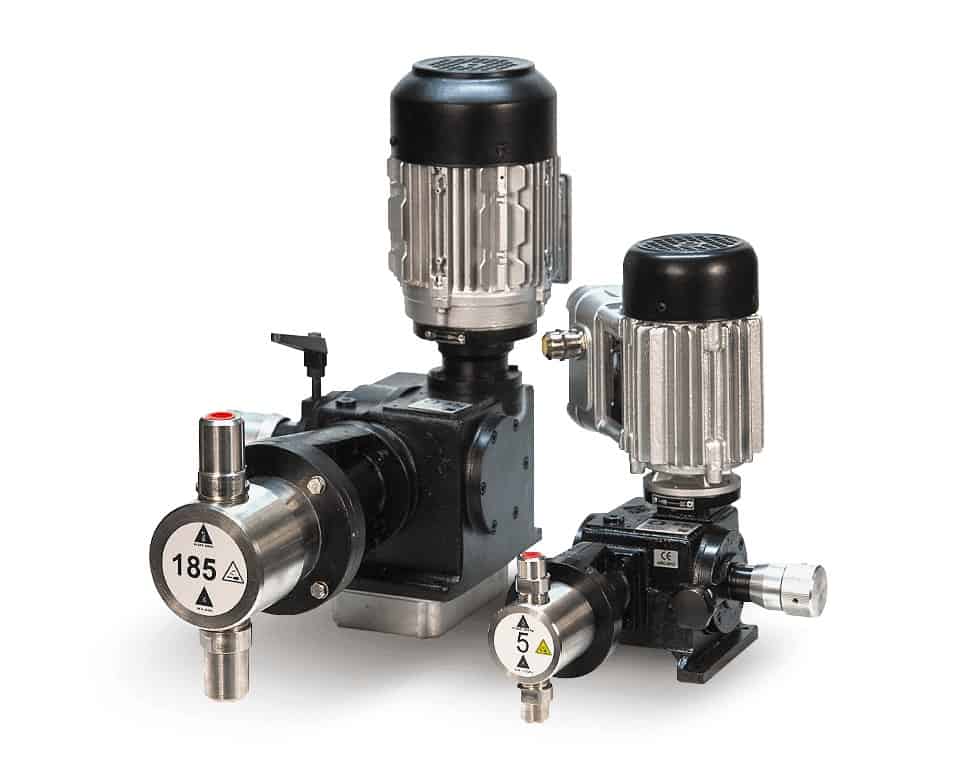
Injection of reagents (anti-scaling agents, chlorine) into water treatment systems
Piston dosing pumps are widely used in industry for the treatment and purification of drinking and process water — they enable precise dosing of reagents, which improves the stability of the plant’s operation.
Advantages of using specialised pumps in reverse osmosis
Using specialised pumping equipment instead of general-purpose alternatives offers significant advantages. The main ones are:
stable pressure even under variable loads;
materials resistant to corrosive media (acids);
lower electricity consumption thanks to correctly selected specifications;
longer service life of the membrane elements;
ease of maintenance and availability of spare parts.
Before deciding on a specific model, it is recommended that you analyse the feed water, calculate the required flow rate and consult specialists. This will help you avoid unnecessary costs and select a pump that will serve its full service life without any problems.
Why you should buy pumping equipment for reverse osmosis systems from Dalgakiran
Here’s why Dalgakiran is the right choice for purchasing pumps for water treatment systems:
A wide range: centrifugal, screw, piston dosing and other types of pumps.
Official distribution: warranty and post-warranty service from the manufacturer.
Technical support: selection, supply, commissioning and maintenance of equipment.
24/7 service: prompt response to all enquiries.
Industry experience: our clients include utilities, food, oil and gas, and energy companies.
Pumping equipment from Dalgakiran combines proven quality, technical expertise and reliable after-sales support at every stage of operation.
Browse our catalogue and choose a high-quality pump for your business!
Need a consultation?
Fill out the form and we will call you.
Your region
Request a call
Thank you, your request has been sent. A manager will contact you shortly.
 0800 30 13 77
 0800 30 13 77
 En
En