0800 30 13 77
 0800 30 13 77
 En
En

 Back
BackFrequency converters: how they help save energy
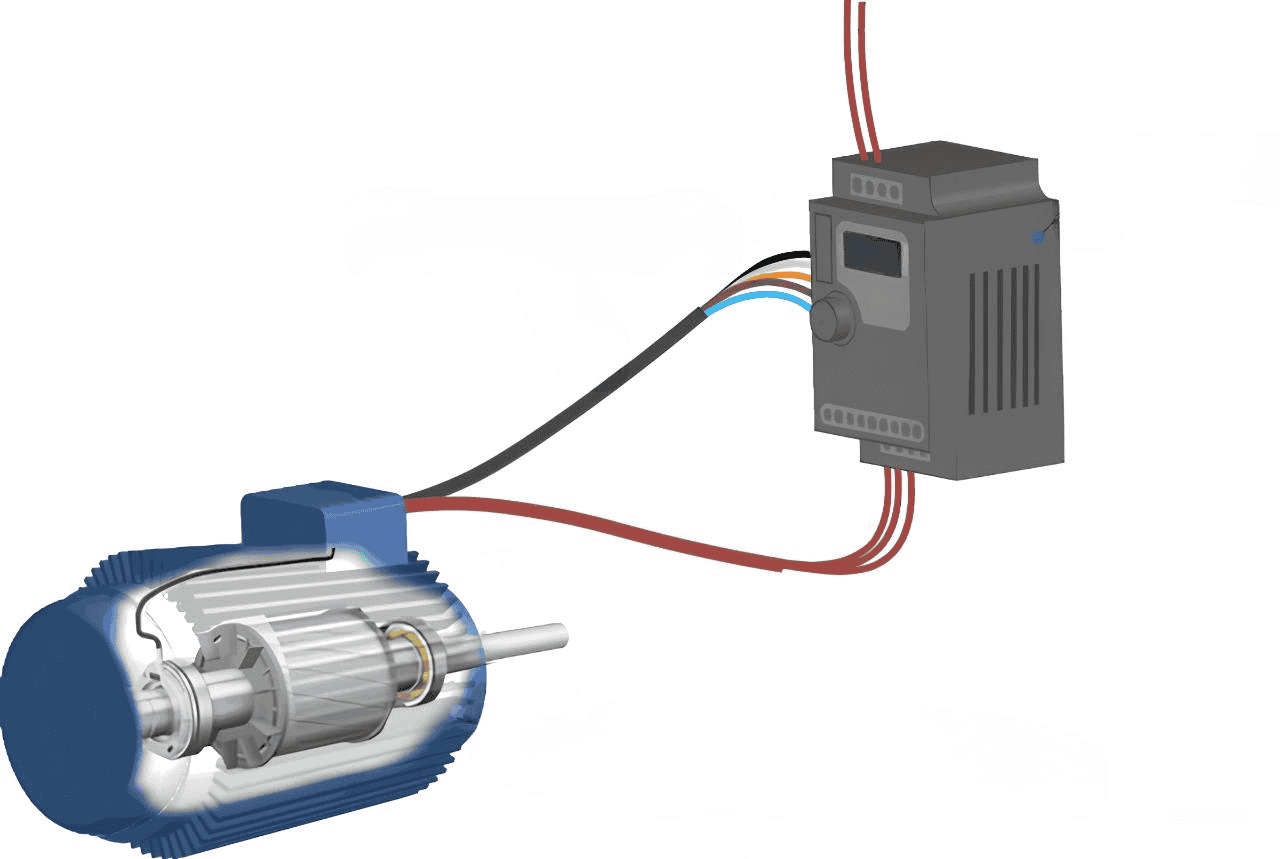
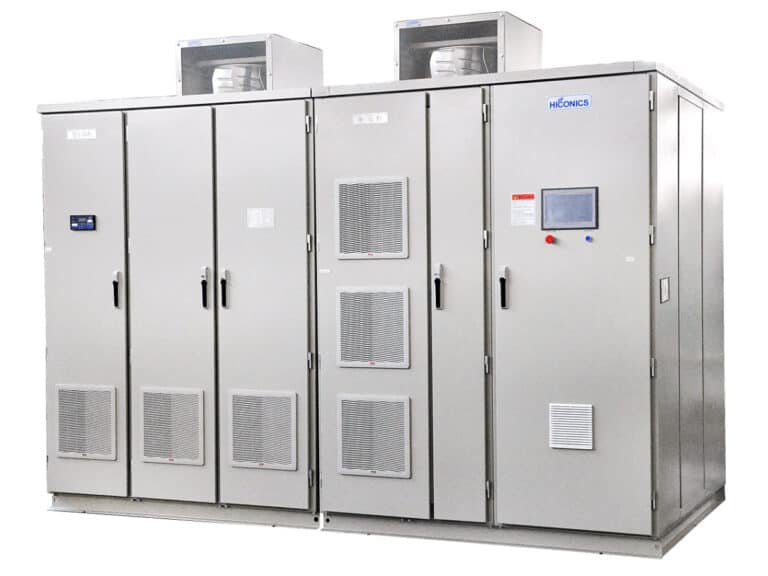 Electric motors usually operate on alternating current. If you control this current by changing the frequency, you can transform the operation of the motor itself in parallel. For example, there is a fixed frequency and voltage. A frequency converter allows you to change these to other parameters, so the motor speed changes, which reduces power consumption to a minimum, and the motor itself can last much longer without repair or maintenance.
How frequency converters work
A frequency converter has a wide range of applications. This device works on the principle of double conversion of the signal from the mains. First, the voltage is applied to the rectifier diodes, after which the harmonics of the sine wave are leveled, and the signal pulsation is preserved. The next stage is to get rid of the pulsation, for which capacitor batteries are used. The output is a smoothed and stable voltage. However, this is not the end of the conversion.
The rectifier module supplies the signal to the bridge circuit for 3 phases. This usually consists of 6 transistors that are protected by diodes. This circuit protects the equipment from breakdown caused by reverse polarity. All frequency converters have powerful transistors and resistors to dissipate energy. This is the most common variant with the connection of the electric motor circuit used in the braking system.
The vector control of the frequency converter deserves special attention. This algorithm allows you to build circuits with automatic signal regulation. The following control schemes are available:
- Pulse width modulation.
- Amplitude.
Amplitude control is based on changing the input voltage, while pulse width control works by switching power transistors, while the input voltage remains constant.
Reducing energy consumption in power systems with variable loads
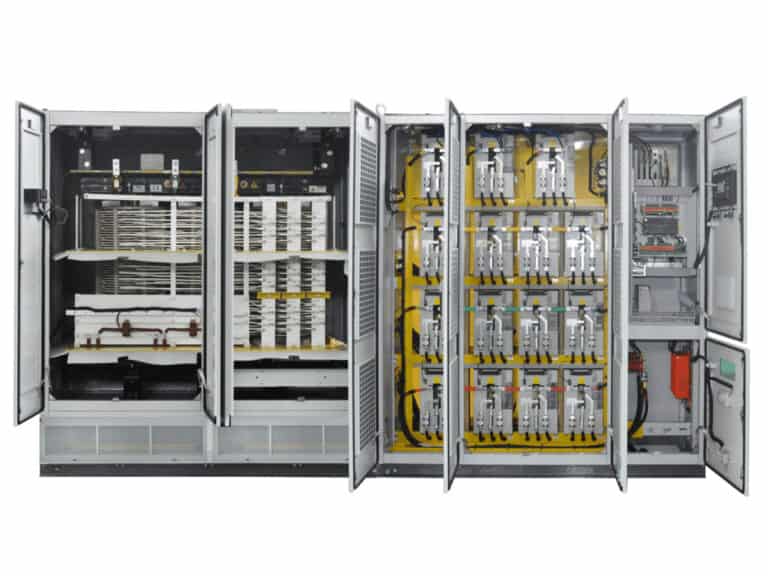 Recently, electricity prices have been rising all over the world, including in Ukraine. First of all, this affects production, as industrial facilities have higher electricity tariffs and consume large volumes.
One of the many challenges for modern enterprises is to improve energy efficiency. Production lines such as conveyors, ventilation systems, air preparation systems, machine tools, etc. require a lot of electricity. Given that this equipment is mostly powered by electric motors, energy efficiency efforts are aimed at reducing electricity consumption.
When there are variable loads on equipment, the best way to save money is to install frequency converters. For example, when designing ventilation or air conditioning systems, the maximum air volume in a room is calculated. However, it is not always necessary to provide the maximum air volume. At some times, the system may operate at 10% of its capacity. It is the frequency converter that can control the speed of the electric motors, creating a given air flow, and thereby save energy.
Another area of application for a frequency converter is pumps. When the pumping station does not need to operate at maximum capacity, the frequency converter can reduce power consumption by reducing the speed of the motors.
In addition, the pump, which can receive variable loads, operates with a frequency converter and prevents hydraulic shocks in the piping system.
The conveyor also has a variable load mode, so a frequency converter is installed on its motor. When you need to speed up the movement of the conveyor belt, the device increases the voltage. The same thing happens when the belt speed decreases.
A similar situation exists with cranes and machinery, where there is always a need to adjust the operation of electric motors to lift loads faster or slower. The higher the motor speed, the higher the costs, but they will be balanced by using a frequency converter.
Energy savings at lower rotational speeds
Using the example of a conventional circulation pump installed in a home heating system, you can understand how energy is saved by reducing the engine speed.
For example, a pump has 3 operating positions:
- The first mode is 35 W.
- The second mode is 50 W.
- The third mode is 65 W.
When the pump operates in mode 3, it consumes maximum energy. When there is no need for the equipment to operate at maximum power, the frequency converter switches it to the first mode, which saves on electricity.
Reduced inrush currents and load on the network
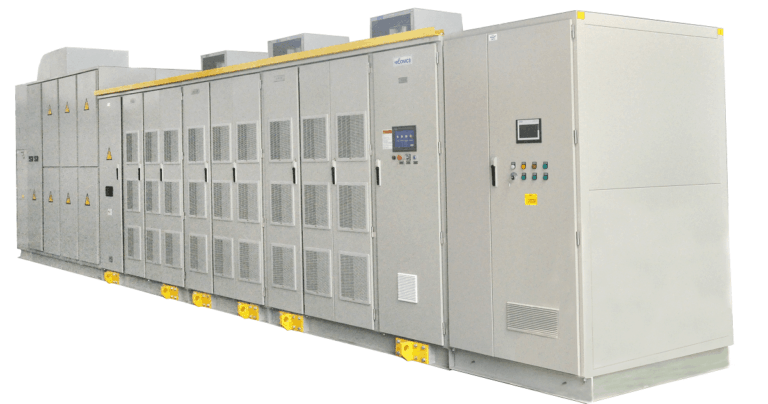 When an electric motor starts to operate, the power consumption can spike. That is, an inrush current occurs. If the electric motor’s circuitry includes a frequency converter, the problem can be minimized. When the motor starts, an impulse occurs that is ten times greater than the parameters of the device itself. The starting current and motor operation parameters are not equal. Thus, a higher current is required to turn on the motor.
A frequency converter is a technological equipment that effectively controls the operating modes of an electric motor. In addition to regulating the speed and torque, the frequency converter also reduces the load on the grid.
Improving equipment efficiency
A frequency converter not only reduces the load on the power grid. First of all, this technique improves the performance of other devices that work in conjunction with frequency converters.
The main task is to stabilize the voltage during the operation of various equipment. The frequency converter copes with this very well. First of all, this is important in production, where there are many electric motors.
The efficiency of the equipment is achieved through:
- Reduced inrush currents.
- Fire prevention, as the frequency converter dampens strong voltage surges.
- Increase the service life of electric motors.
The frequency converter can also be used in everyday life. For example, it is used in circulation and submersible pumps, ventilation and air conditioning systems, and other devices where it is critical to control the speed and speed of electric motors.
Improving the operational reliability of systems
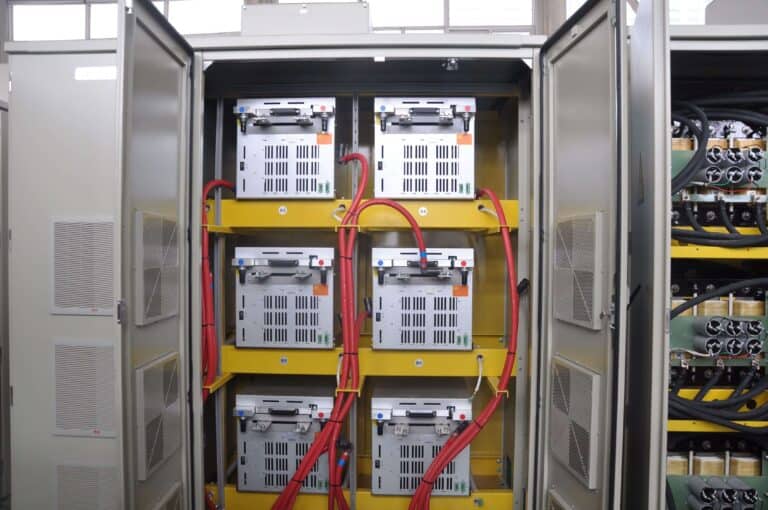 Any mechanism that runs on electricity has its own performance characteristics, as well as a power reserve and service life. There are many modern systems for protecting electronics from power surges (e.g., stabilizers), circuit breakers, etc.
When it comes to an electric motor and the need to control its operating modes, the best option to increase the operational reliability of the system is to install a frequency converter. It allows you to rectify the signal and performs the function of double automation. Thus, signal rectification is important where there is an undervoltage of the output current. The problem can be solved by purchasing an inexpensive frequency converter that has a simple design and operating principle.
Double automation with a frequency converter is triggered when the output current is at a higher or equal frequency.
One way or another, a frequency converter that will work in tandem with an electric motor and other types of devices can significantly save on energy costs, additionally protecting the equipment from short circuits, overvoltage, etc.
Given that there are many such devices on the market (the same applies to generator equipment), it can be very difficult to make the right choice. However, a timely appeal to a specialist will simplify the task as much as possible: after competent miscalculations, preference will be given to the device that can meet the needs of a particular system, given its design complexity.