 0800 30 13 77

 0800 30 13 77
 En


 Back
Are there any quiet air compressors?
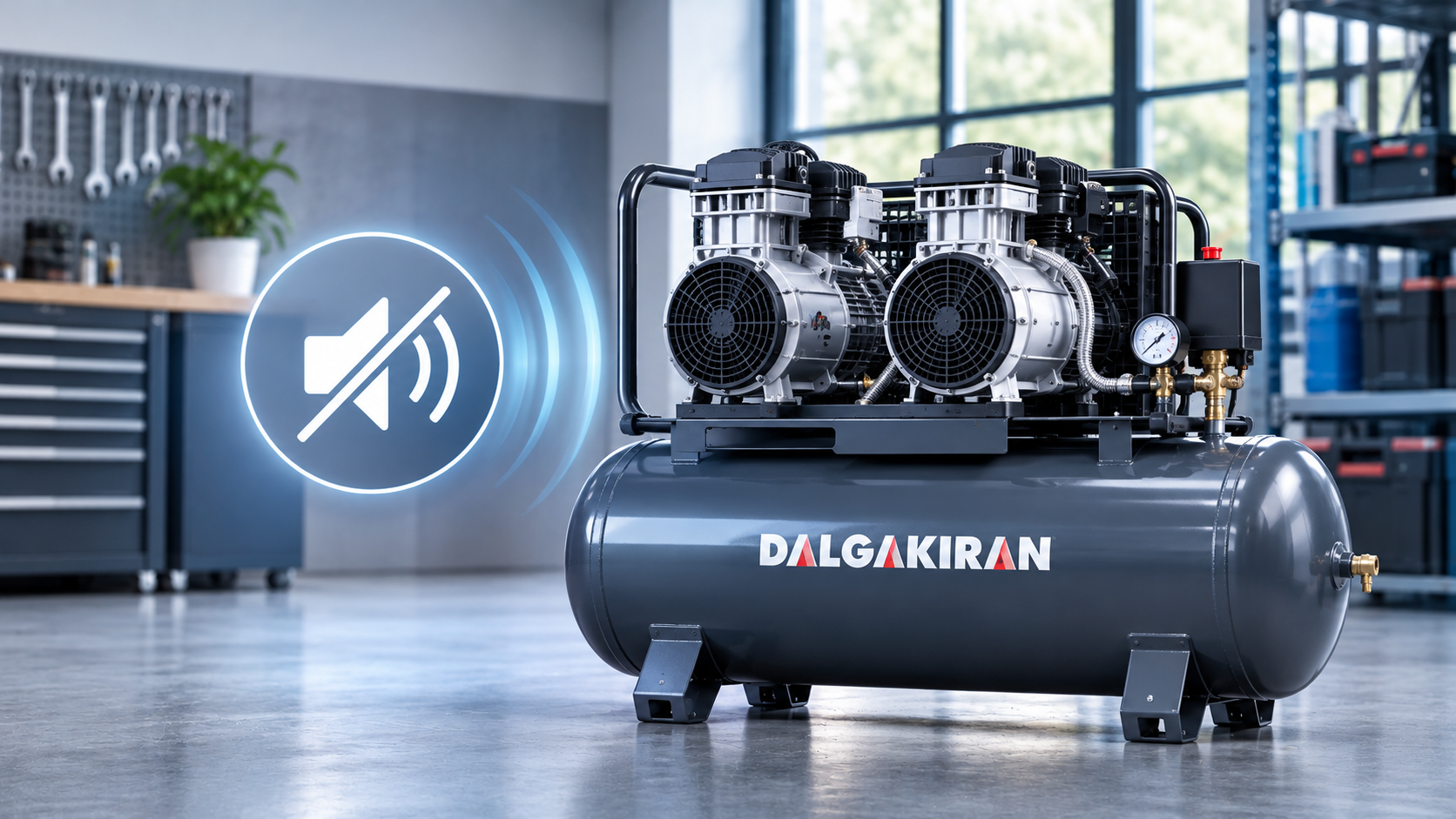
Loud noise from a compressor unit during operation is a common problem in many manufacturing facilities, workshops, and medical institutions. Prolonged noise exposure not only tires staff but also limits the ability to install equipment directly in the workspace. This naturally raises the question: Are there quiet air compressors capable of delivering the necessary performance without excessive noise? Below, we’ll take a detailed look at how such equipment is designed, what makes it quiet, and how to choose the best model.
What does “quiet compressor” mean, and how is noise level measured?
In industrial settings, noise levels are measured in decibels (dBA). To put this into perspective: a standard open-type piston compressor emits between 85 and 100 dBA, which is comparable in volume to a subway train.
Equipment is considered low-noise if the sound pressure level does not exceed 60–70 dBA. At this volume, you can comfortably carry on a conversation next to a running machine without ear protection.
The following guidelines are used to evaluate acoustic characteristics:
- 50–58 dBA — ultra-quiet oil-free compressors, ideal for medical offices and laboratories;
- 60–68 dBA — standard quiet air compressors in a soundproof enclosure;
- 70–78 dBA — industrial units with reduced noise levels;
- over 80 dBA — classic equipment without soundproofing.
The specialists at “Dalgakiran” always take permissible noise levels into account, which allows for the proper integration of compressor equipment into the workspace without compromising staff health.
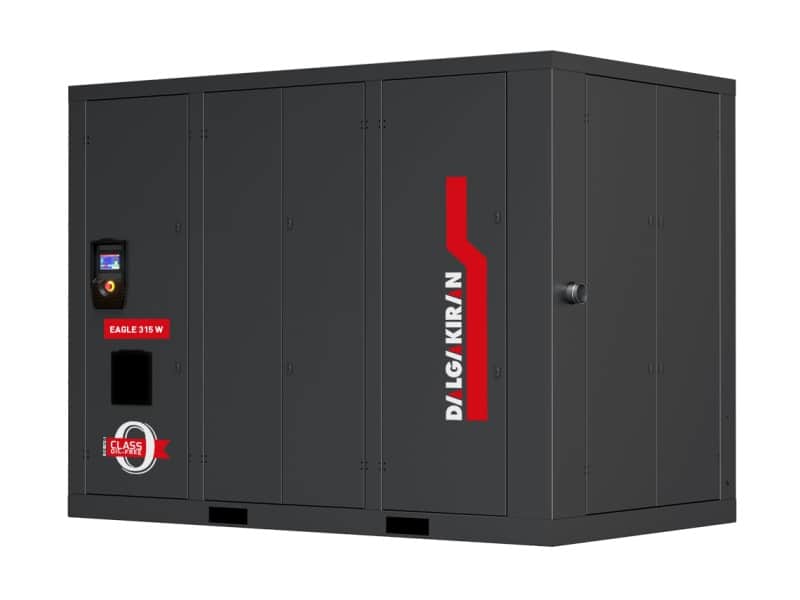
Main sources of noise and vibration in a compressor unit
Background noise does not originate from a single point but is the result of the simultaneous operation of several components. The main sources of acoustic vibrations are:
- air intake and acceleration of the airflow at the system inlet;
- reciprocating motion of mechanical parts and friction in the compression chamber;
- metal vibration transmitted from the electric motor to the frame housing;
- pressure pulsation at the outlet and the operation of the cooling fan.
To select a quiet and reliable air compressor, engineers combine sound-insulating enclosures, vibration-damping bases, and special intake silencers.
Types of compressors with reduced noise levels and design solutions for quiet operation
Noise reduction is achieved either through the characteristics of the compression principle itself or through the use of special protective elements. The screw compressor unit differs fundamentally in its acoustic characteristics: the absence of impact loads makes its operation smooth and quiet.
Key design solutions include:
- a special sound-absorbing enclosure with multilayer panels;
- an effective intake and exhaust silencer to dampen aerodynamic pulsations;
- a flexible vibration mount that prevents the transmission of vibrations to the floor;
- a direct or belt drive with a low-speed electric motor.
Modern screw compressors are ideal for general industrial applications and come standard with a sound-insulated enclosure. Thanks to this, quiet air compressors can be installed directly in workshops next to operators’ workstations.
Criteria for selecting a quiet compressor
When purchasing, it is important to consider not only the rated decibel level but also the conditions under which the equipment will operate. An incorrectly calculated operating mode can lead to overheating of the enclosed housing.
Before choosing a quiet air compressor, it is worth evaluating the following parameters:
- the required operating pressure and the system’s actual capacity;
- the acceptable noise level for a specific room or workshop;
- the type of operation—long-term continuous cycle or intermittent operation;
- the availability of free space to ensure proper cooling.
A universal solution for large facilities is modular compressor stations (MCS), which relocate all noise sources outside the main workshops.

Ways to reduce noise after installation
If a facility already operates high-noise compressor equipment, the noise level can be reduced through additional measures. Proper installation and local sound insulation yield noticeable results.
Effective measures include:
- Installing equipment on vibration-damping mounts or a separate foundation;
- Installing a soundproofing screen or a separate acoustic enclosure;
- optimizing the air ducts and channels through which ventilation flows;
- regular maintenance, including replacement of worn bearings.
DALGAKIRAN engineers are always ready to help you select high-quality compressor equipment with the necessary acoustic comfort parameters.
Conclusions
The use of protective enclosures, high-quality silencers, and screw-type units allows for comfortable work near the equipment.
By choosing a proven technical solution from “Dalgakiran,” you gain reliability, energy efficiency, and acoustic comfort in your production facility—because everything works with “Dalgakiran.”


