0800 30 13 77
 0800 30 13 77
 En
En

 Back
BackGear pumps
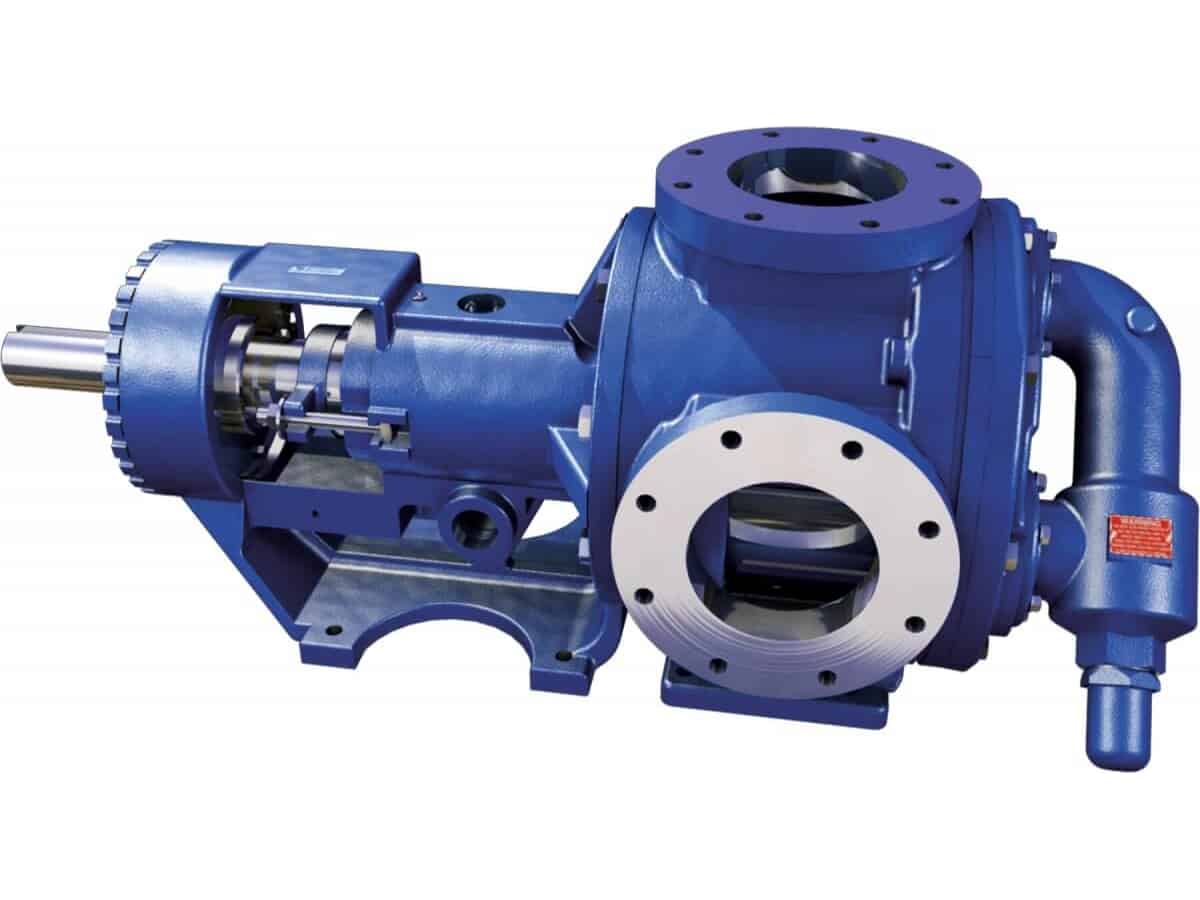
Gear pumps, which are referred to as volumetric pumps and have proven themselves in working with liquid media of various viscosities, have become widespread in a wide variety of industries, the main ones being:
- oil refining industry: pumping oil products that do not contain mechanical inclusions and do not cause corrosion, such as paraffin, naphtha, fuel oil, oils, diesel fuel, etc;
- machine-building industry: operation as part of the main operating equipment (start-up is carried out by one of the equipment units in which the gear pump is integrated);
- construction industry: pumping bitumen, liquid chalk mortars, mastic, etc;
- viscose industry: integration of gear units into the main equipment; pumping cellulose acetate, viscose solution; production of chemical fiber, etc;
- food industry;
- paint and varnish industry;
- chemical industry;
- pharmaceutical industry;
- Medicine;
- shipbuilding.
Gear pump design
According to the design of its working chamber and its type of connection to the inlet and outlet ports, gear pumping equipment is classified as volumetric.
The design of the gear pump is extremely simple, so its maintenance does not require large financial costs and human resources: the unit consists of a pair of gears (rotors) – driving and driven, placed in the working body with minimal gaps, hooked one to the other. During the rotation of the gears, the liquid medium is caught between their teeth, which leads to its isolation from the suction and pressure lines. Then, under the influence of the pressure, the liquid is forced by the teeth into the pressure vessel itself. This process is cyclical, and it continues constantly as the gears rotate.
Gear pump units are divided into two types – depending on the design aspects of the gears, the pumps are available with internal and external gearing. The working body of externally meshing gear pumps consists of cylindrical gears equipped with chevron, straight or oblique teeth. It should be noted that the chevron teeth are designed to reduce the noise level during pump operation, as well as to minimize negative factors that directly affect the performance of the unit. Gear pumping equipment with internal gearing is equipped with a double gear system, one of which is external (with an internal gear crown) and the other is internal (with an external gear crown). Both gears are eccentrically located in the working body of the unit and are meshed with each other. The internal gear is usually the drive gear. The process of pumping fluid in an internal gear pump is practically the same as in an external gear pump.
If you are faced with the task of choosing and buying a gear pump, you should take into account that units with internal gearing are lighter and smaller in size compared to units with external gearing, but they significantly lose out in the production process. In addition to the above, the operation of pumps with internal gearing is limited to a pressure of up to 14 MPa.
Advantages of gear pumps over other types of pumps
Gear pumping equipment is consistently in high consumer demand in the global market due to a number of advantages over other types of units. The most important of them are the following:
- high efficiency (up to 90%);
- reliability, durability, and efficiency;
- relative compactness;
- simplicity of the unit design;
- relatively low cost of manufacturing the pump;
- no working units and parts subject to the harmful effects of centrifugal force;
- the ability to change the direction of the pumped liquid medium (reversibility);
- the ability to create high pressure;
- the ability to pump liquid media with different temperatures and varying degrees of viscosity;
- No need to lubricate moving parts of the pump;
- no strict requirements for liquid purity (inclusions up to 100 microns are allowed);
- the possibility of increasing the efficiency and productivity of the unit when pumping liquid media with a high viscosity index by increasing the number of stages or a larger number of gears located around the drive gear.
Along with an impressive list of advantages, gear pumps also have a number of limitations that cannot be ignored when choosing the right unit:
- uneven flow of the liquid medium, resulting in pulsation at the pump outlet;
- increased noise and vibration levels during operation of the gear pump;
- Constantly directed, increased load on the gear supports, which affects the wear resistance of the unit;
- high sensitivity to increasing gaps between the gears and the housing;
- a significant decrease in volumetric efficiency with increasing temperature of the working fluid.
Gear pumps from Dalgakiran Compressor Ukraine
Dalgakiran Compressor Ukraine LLC is the official dealer of the world-famous pump manufacturer Gorman Rupp (USA) and exclusively represents GR series G gear pumps on the Ukrainian market.