0800 30 13 77
 0800 30 13 77
 En
En

 Back
BackOperation of the EBHV – FC series chiller
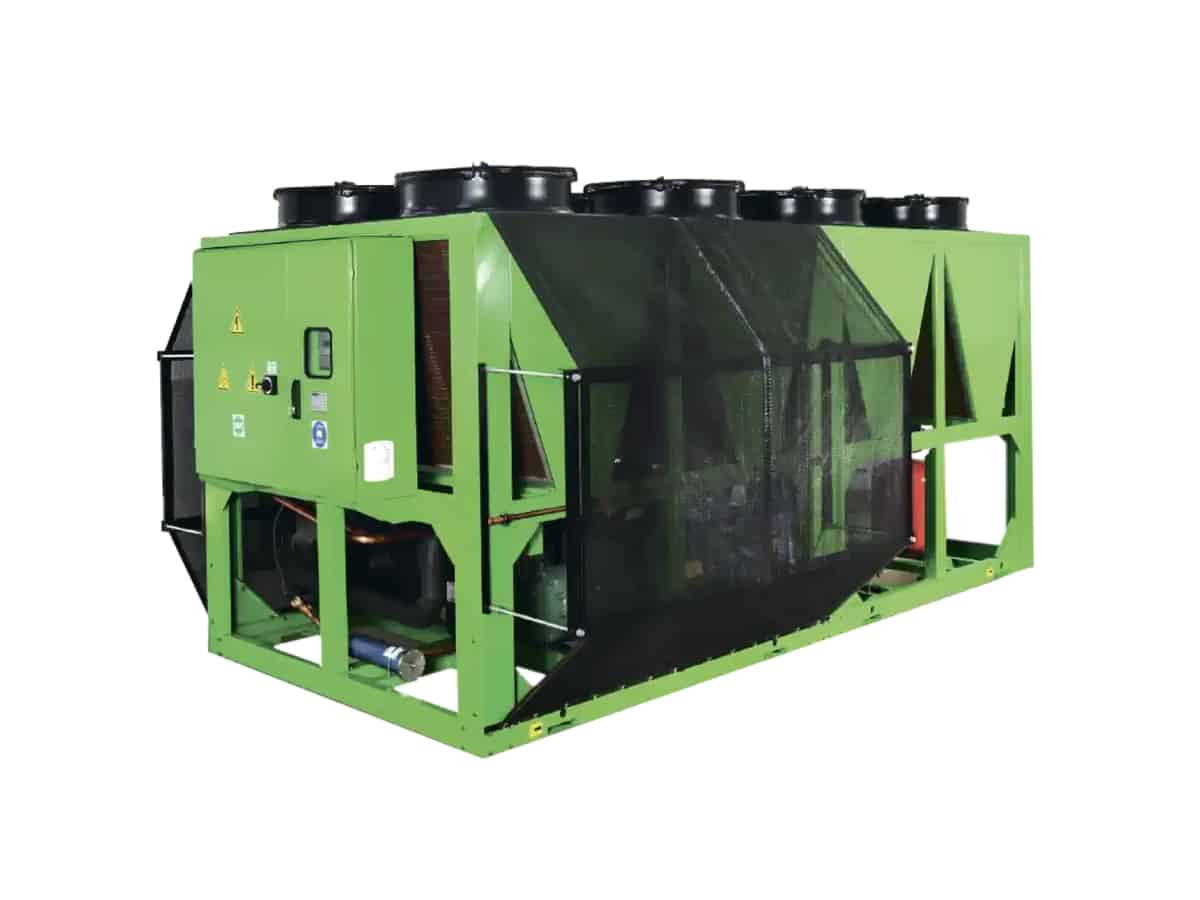
How it works
Microprocessor control system: The unit utilizes a microprocessor-based control system. The system monitors and displays the liquid inlet temperature, ambient air temperature, suction and discharge refrigerant pressure, compressor runtime, all system failures or alarms, and message history.
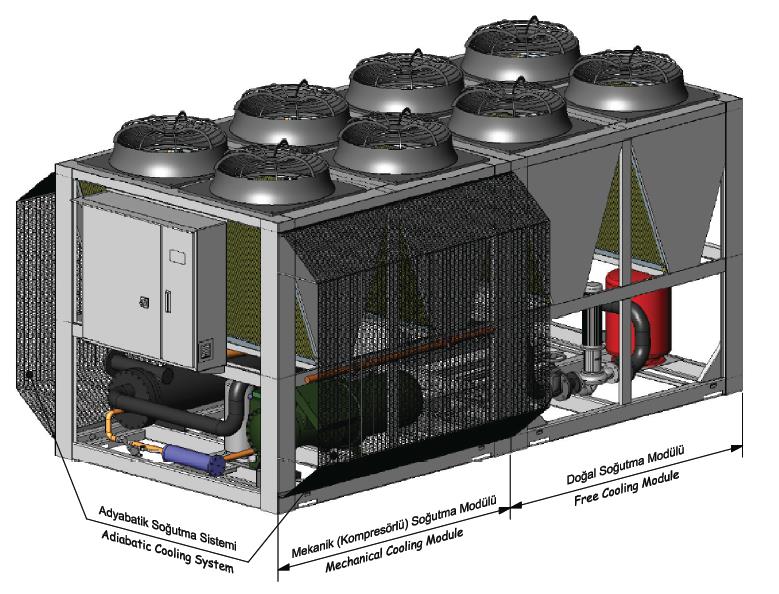
A microprocessor-based control system decides which modules (compressor and/or free cooling) are active depending on the ambient temperature and the required outlet water temperature. The operating time of each compressor is balanced to ensure optimum plant efficiency.
Free Cooling (section): Free cooling. The principle is the direct use of cold outside air in the autumn and winter seasons. For this purpose, the system is supplemented by a heat exchanger section with a non-freezing liquid cooling circuit (aqueous ethylene/propylene glycol solution). This solution, in turn, is blown by a direct-drive axial fan for greater efficiency. This “free cooling” section reduces the operating time of the compressor, which is the main consumer of electricity in the cooling system, and thus significantly increases its efficiency.
Chillers chillers with Free Cooling function can save up to 60% of electrical power per year, depending on the ambient temperature. The payback period is 1-1.5 years.
3-way valve: A 3-way valve, which is controlled by a servo, opens or closes the input ports depending on the input signal from the microprocessor. The 3-way valve operates in an on/off mode.
Hydraulic module: Optional (not included as standard) and consists of a circulation pump with expansion tank, safety valve, pressure gauge, shut-off valves, and flanges.
The Dalgakiran chiller has the following advantages:
- Energy consumption decreases significantly throughout the year.
- Environmentally friendly due to its lower carbon footprint.
- Reduced maintenance costs.
- Extended compressor service life.
- Easy installation and ease of use of the device.
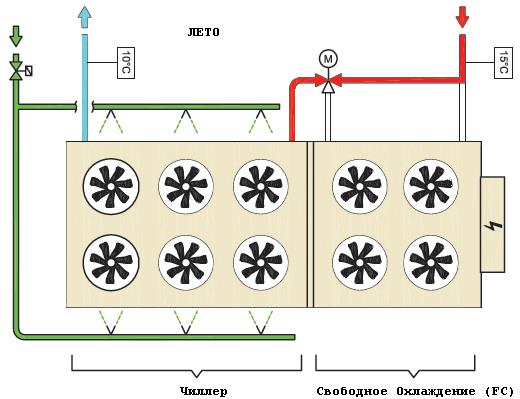
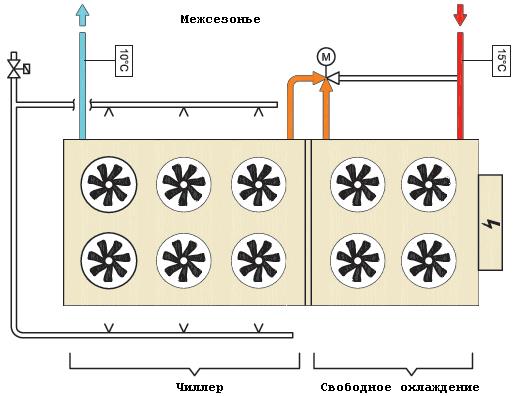
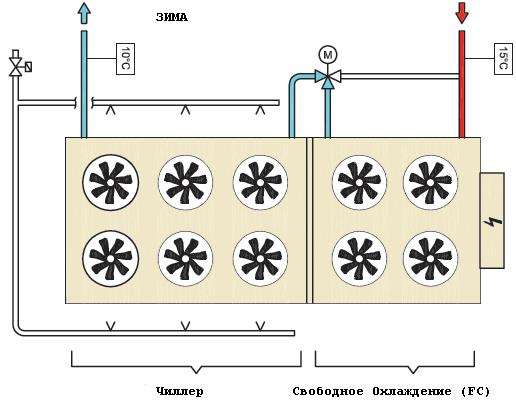
The system operates in an automatic mode, the order and sequence of switching on the free cooling module (FC) or the vapor compression unit, or their joint operation is determined by the microprocessor algorithm. For example, in summer, when the ambient temperature is above 36°C, the system’s automation connects adiabatic cooling, which reduces the condensing pressure of the gas in the condenser, thereby increasing the chiller’s cooling capacity. In the off-season, when the air temperature has dropped to, for example, +12°C and the consumer needs to be supplied with +10°C, the system partially cools the water in the free cooling module (FC) and is further cooled in the compressor unit, thereby saving part of the electricity consumed for cooling. In winter, when the air temperature is around +5°C or below, only the free cooling module (FC) operates, and the compressor unit does not start at all.