0800 30 13 77
 0800 30 13 77
 En
En

 Back
BackHow to choose a diesel generator? A step-by-step guide

When the operation of a home or production facility depends on electricity, choosing a backup power source becomes very important. A properly selected diesel generator starts up without delay, produces a stable voltage under load and can withstand your consumption mode. So let’s look at the practical steps that will help you avoid overpaying for excess and losing quality.
Determination of electricity needs
First, find out what your real needs are and what your noise and budget limitations are. It will take some time, but the result will be an informed choice without surprises:
- Gather a list of consumers and determine their starting and operating currents, then summarize the active and total power, taking into account simultaneous operation.
- Divide the loads into critical and secondary loads to prioritize switching on and prevent the diesel unit from “sagging” in the first minute.
- Determine where and how the installation will operate: an enclosed box or an open area, ventilation, exhaust and service access.
- Agree on the start mode: manual, keyed, or automatic via automatic transfer switch (ATS).
- Estimate the minimum required autonomy in terms of time and allocate space for a tank or an external cistern.
After these steps, you will know the needs, placement limits, and real capacity for calculation.
Type of installation
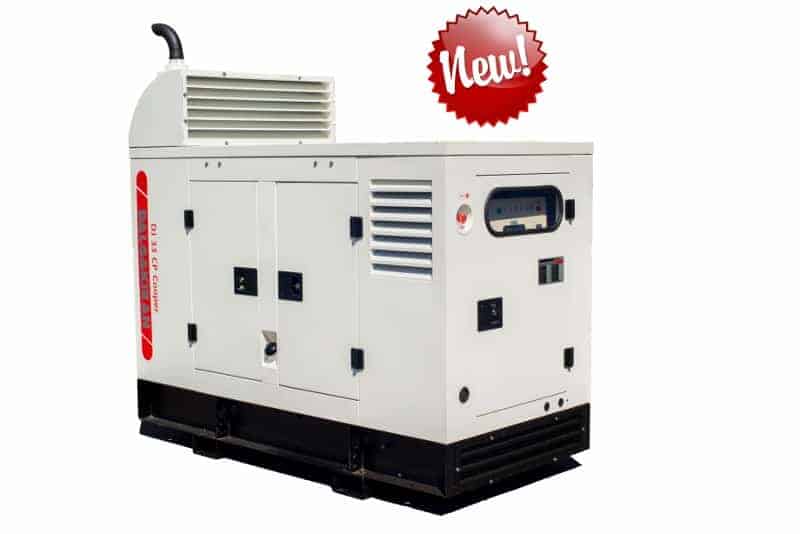
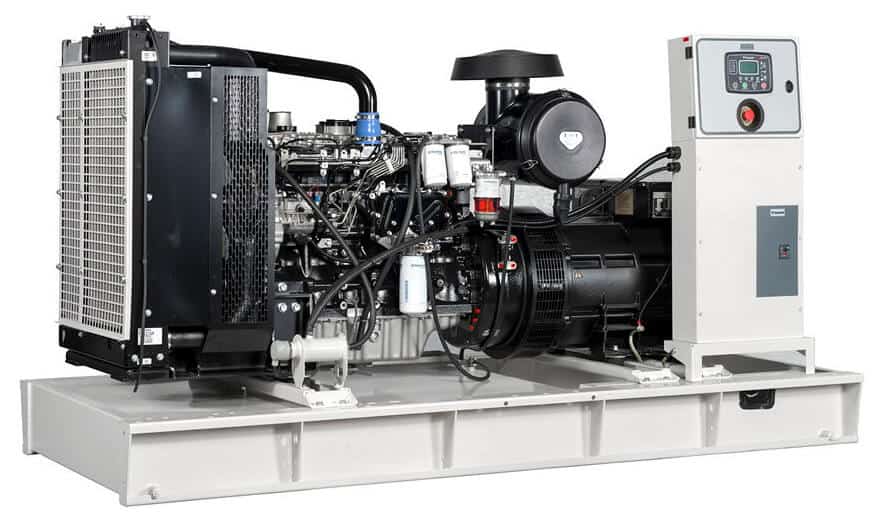
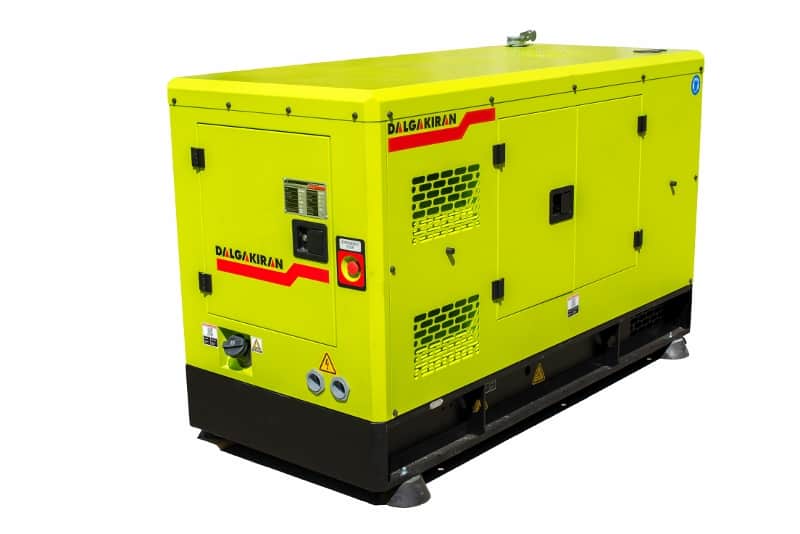
The type of design depends on the use scenario – portable, mobile or stationary in a casing or container. Mobile solutions have a reinforced frame, folding handle and wheels for quick movement by 1-2 people. Stationary solutions are the basis for long operating intervals without moving and better acoustics. Here is a brief description of their differences:
- The mobile format is suitable for service crews, seasonal work, and rental. Compactness, grip handle, large wheels, and quick access to components are important here.
- The stationary version is chosen when noise insulation, a large tank, protected ventilation and convenient operation in one place are important.
Choose the type for the task: mobile – when you need to move frequently between objects, stationary – when you install it once and it works for years.
Power
Calculating a simple “sum of watts” is rarely enough. In motors, compressors, and pumps, the starting current is several times higher than the operating consumption. Hence the rule: design the power with a margin for starts (often 20-30%), and add a soft start or power-on sequence for heavy starts. If the network keeps both business and residential under one feeder, list the day and night profiles separately – it makes it easier to make the right choice.
Application area
For a private house, the key requirement is quiet operation, easy start-up and economical fuel consumption in standby mode. For business processes, frequency stability, voltage quality, and predictable maintenance outages are important. You can view the lines for different tasks in our generator equipment catalog, where you can see the power ranges and design options.
Operating conditions
Climate, altitude, dust and acoustic requirements shape the working environment. In cold weather, jacket heating and battery charging are useful, and in hot weather, adiabatic cooling of the inlet air is useful. For dust and sand, high-capacity filters and more frequent monitoring are desirable. In dense buildings, screens and silencers are important to reduce noise without losing ventilation capacity.
Important parameters and design features
To ensure that the system operates reliably for many years, consider the following parameters:
- Cooling. Air cooling is simpler and cheaper, while liquid cooling is more stable under prolonged load and in the heat.
- Autonomy. The built-in tank, the ability to connect an external reserve, and the consumption per kWh all affect the refueling intervals.
- Noise. The quality of the casing and muffler, rubber-metal supports, and correct air exchange create quietness and comfort.
- Automation. Control relays, battery charging, pressure/temperature protection, automatic transfer switches, remote monitoring – all this is critical for “unmanned” shifts.
- Service. Access to filters and belts, space for oil drainage, logical arrangement of terminals – less downtime for maintenance.
When all this is balanced, errors and downtime are reduced.
Type of launch
There are three options – a manual starter for small units, a keyless electric starter and automatic start via automatic transfer switch (ATS). For a home, an electric starter provides comfort and quick response without physical effort. For a farm or warehouse, the ATS removes the human factor and reduces the seconds before power is supplied.
Pay attention to the elements that affect startup reliability. The glow plug and heated cooling jacket help to ignite the mixture without “white smoke” in winter. The maintenance charger keeps the battery in working condition during idle time. Delays are important in the ATS settings: start after a power outage for 1-3 seconds, warm-up before connecting the load for 10-30 seconds, and cool down before stopping for 1-3 minutes. Do not crank the starter for more than 10-15 seconds in a row and pause between attempts.
Battery life
The fuel supply is planned based on a scenario – daily, weekly, etc. Actual autonomy depends on the average load, diesel fuel quality, and filtration condition. It is easy to estimate the operating time. There is an approximate specific consumption for diesel units – from 0.22-0.28 l/kWh for medium and large units to 0.3-0.4 l/kWh for small ones. Multiply the average power consumption by this consumption and get liters per hour.
For example, if you generate an average of 12 kW and use 0.28 l/kWh, you will get about 3.4 l/h. A 100-liter tank will last approximately 29 hours without refueling. For longer reserves, external tanks with flow meters and level sensors are convenient.
Winter diesel fuel with a lower temperature is more stable in cold weather. A water separation filter and regular drainage of condensate from the tank prevent stoppages due to water in the fuel. Breather valves and proper slopes of the lines reduce the risk of air being sucked in. In industrial facilities, choose double-walled tanks with a catch pan and overflow protection.
Noise level
Even a “quiet” casing will not help if the unit rests against a blank wall or “breathes” through a narrow grille. Evaluate the air intake and outflow paths and route them without sharp turns. Place flexible inserts on the exhaust and air ducts to prevent vibration from being transmitted to the building. Use rubber-metal supports to eliminate hum on floors.
Choose a muffler of the right class – standard for the yard, increased for dense buildings. Remember the difference between sound pressure level and power level: a 3 dB decrease is perceived as noticeably quieter, and a 10 dB decrease is perceived as twice as quiet. For a residential area, the benchmark is 60-65 dB(A) at 7 meters. On an industrial site, more is allowed, but time restrictions and the direction of the exhaust are important.
Cooling system
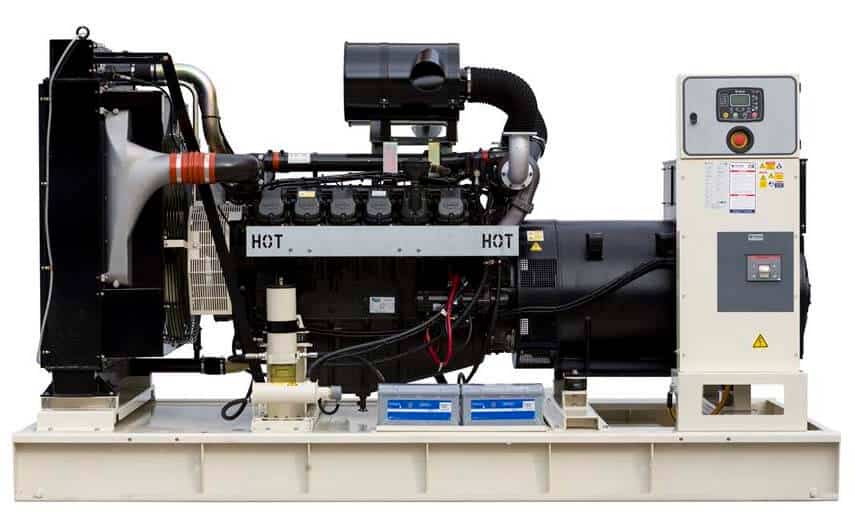
Air cooling is good for short and medium cycles where simplicity is important. Liquid cooling is the choice for long shifts and hot regions: stable temperature, less thermal swings, and longer service life. For continuous diesel operation in summer, the liquid system is more suitable.
Control and automation
Modern automation does not only start and stop the unit. It keeps event logs, monitors voltage/frequency, pressure/temperature, battery status, etc. This reduces human error and provides a transparent log. For production facilities, you should pay attention to the manufacturer’s recommendations for integration into the BMS.
The ability to move
If you are planning to move, look for a transport frame with forklift pockets, towing lugs, and large-diameter inflatable wheels. An ergonomic handle and clamps are important so that the unit does not “walk” in the body. For industrial tasks, there are factory trolleys and trailers – these are safer than handicraft solutions for a mobile installation.
Recommendations for choosing a generator for home or business
To make the right decision, check out the ready-made series. For private scenarios, a moderate power unit with an ATS and a good casing is sufficient. For business, it is better to look at Dalgakiran industrial diesel generators with automation and backup options. If the facility is powered by a high-voltage network, high-voltage diesel power plants of 6.3-10.5 kV are suitable, which are immediately integrated into the switchboard without intermediate transformers.
Also, keep in mind the following recommendations:
- check the actual inrush currents and load profile, not just the “wattage sum”;
- Consider ventilation, exhaust, and maintenance space in advance so that the conditions are suitable for work;
- agree with the service on the schedule of inspections and the availability of consumables in the warehouse.
This approach will save time during procurement and installation.
Common mistakes when choosing a diesel generator
It is worth knowing about the typical “rake” to avoid unnecessary costs and downtime:
- Focusing only on peak power without taking into account starts and simultaneity. This leads to voltage dips and emergency shutdowns.
- Incorrect type of design. For example, a tight casing without air exchange in the heat or an “open” unit in the yard.
- Ignoring acoustics. Without screens and a muffler, even a high-quality hood won’t reduce noise.
- Underestimation of automation. The absence of automatic transfer switches and event logs means long pauses and complicated troubleshooting after breakdowns occur.
- Poor site preparation and installation conditions (narrow aisles, lack of space for service, problematic drainage, etc.).
Working through these points in advance reduces risks and prevents mistakes from turning into expensive repairs. To ensure that the generator works for a long time, choose a generator not by brand, but by tasks: the scope of application, location conditions, required power, cooling format, level of automation, and real autonomy.