0800 30 13 77
 0800 30 13 77
 En
En

 Back
BackHow to choose a compressor?
When you set up a workshop, car lot or small shop, the first question is what kind of compressor you need and how to choose it without overpaying. Compressed air is a universal “fuel” for tools, painting, purging and testing. That’s why we’ll write down an algorithm for you: where the units are used, how to navigate the classes and types, what to look for in the passport, and how to choose the right model for the task and budget. We also advise you to look through the catalog of compressor equipment, and for highly specialized tasks, the sections on oil-free compressors and mobile diesel solutions.
What compressors are used for
A compressor delivers a steady stream of compressed air, so it’s needed everywhere – from the garage to the production facility. Let’s take a look at typical scenarios for its use:
- Painting stations. Air flow must be even, pressure must be stable, and oil and moisture must be minimal, otherwise the coating will deteriorate. Properly selected dryer and filters give a predictable result.
- Construction and installation. Pneumatic tools last longer under load, are easier to maintain, and are more resistant to dust.
- Car service and tire fitting. Torque and air flow are important for wrenches, blowers and guns.
- The food and pharmaceutical industries. Here, an oil-free circuit and careful filtration are required to ensure that the air does not come into contact with lubricating impurities.
- Sand and abrasive work. Sandblasting requires a significant performance margin. It is important to choose the right nozzle and control the humidity so that the feed does not sag.
The general approach is simple – each application has its own parameter profile, and it tells you which format is best for certain tasks.
Types of compressors by class
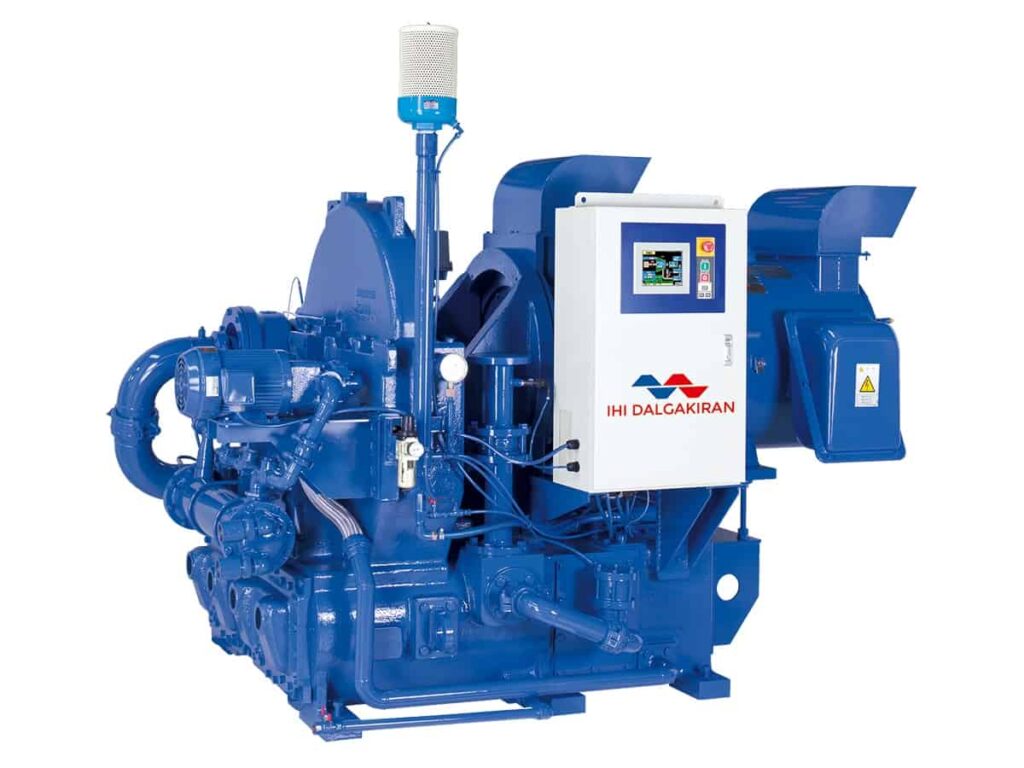
To avoid overpaying, first determine the mode of operation and the tools it is intended to pull. The application class directly affects the service life, drive type, power requirements, and air preparation. Below are three operating levels with realistic parameters and limits.
Household
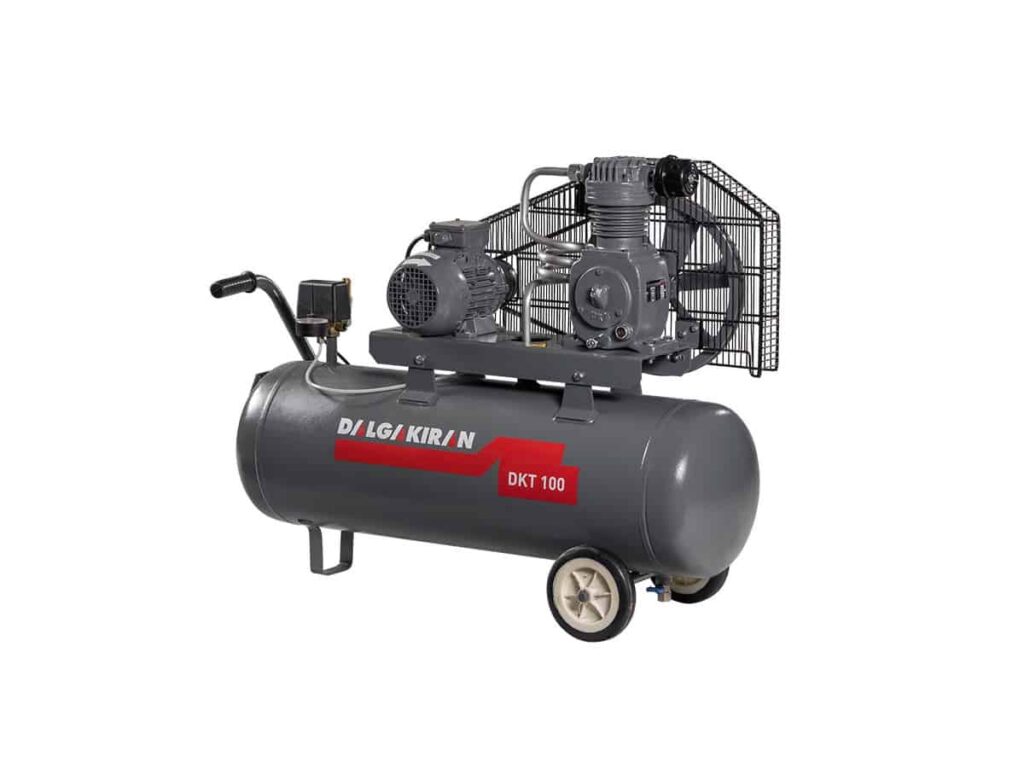
It is the choice for garages, private workshops and occasional tasks at home. They are convenient for inflating tires, blowing out tires, and minor painting. Usually, these are direct-drive piston models with 220 V power supply. The operating benchmarks are a flow rate of about 150-300 l/min at the outlet, a pressure of 6-8 bar, and a receiver of 24-50 liters. Advantages – compactness, easy maintenance, low price, and easy startup in a cold room. Limitations – noticeable pressure pulsations, higher noise, and rapid fatigue under continuous load. If sandblasting, long painting sessions, or a couple of tools at the same time are planned, a different class is required.
Semi-professional
They are suitable for service stations, small workshops, furniture and repair areas where the compressor operates for several hours every day. Belt-driven piston solutions or compact screw units are appropriate here. Realistic parameters are 250-500 l/min output, 8 bar and above of stable pressure, 50-150 l receiver, 30-60% on time depending on the model. Advantages – more even flow, better shift endurance, the ability to connect a dehumidifier and filters for painting. It is necessary to follow the maintenance schedule, belts and filters, as well as to select the cross-section of the lines so as not to “eat up” the pressure on long sections. If you have a spray gun and a blower or a tool with a high air consumption at the same time, this class often covers the need without switching to large stations.
Professional
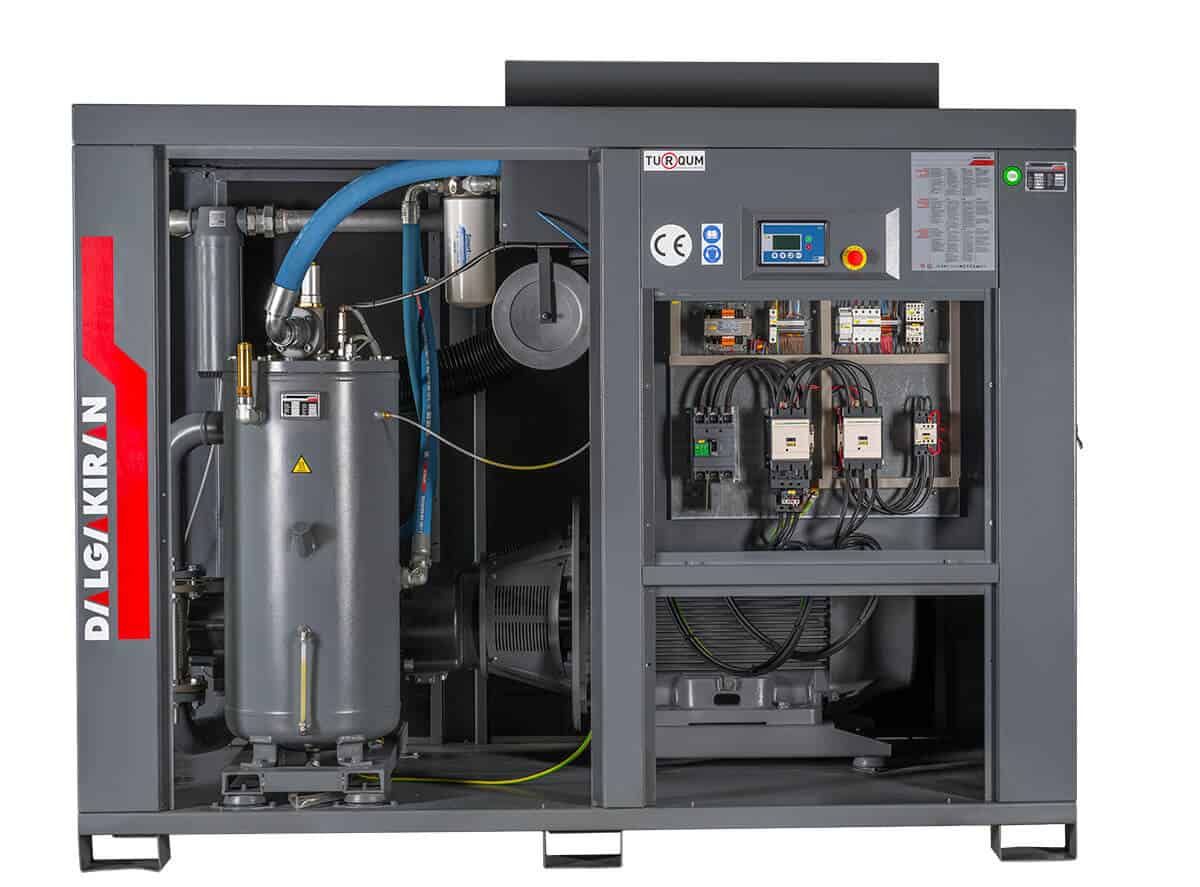
They are designed for long shifts and stable loads in workshops, paint booths, packaging lines, sand and abrasive areas and production facilities. The basic choice is continuously rotary screw compressors, three-phase 380 V power supply, separate ventilated and noise-proofed location. Typical ranges are 500-2000+ l/min output, working pressure of 10 bar and above for specific tools or large receivers, and 60-100% on time. Mandatory elements include a dehumidifier, coalescing and carbon filters, and condensate drainage. This class is used when the stability of parameters during a shift, the predicted service life, and the economy of electricity consumption over a long distance are important.
In practice, the choice between classes is decided by three questions: how many hours a day the compressor will operate, what is the total air flow rate at the peak moment, and what are the requirements for the purity of the supply. If you are hesitating between two levels, it is safer to take the higher class with a small margin of performance – it is cheaper than stops, downtime and rejects.
Types of compressor equipment by type
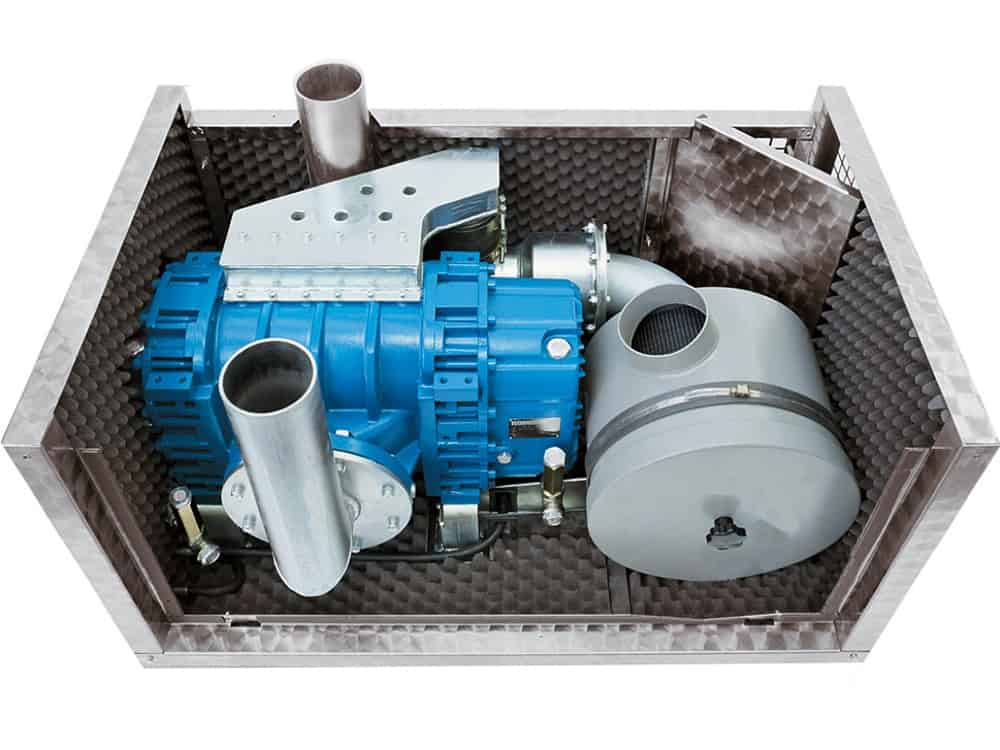
Let’s look at the main types of compressor equipment, each of which has its own niche and maintenance requirements.
Piston
Reciprocating units are appropriate where simplicity, maintainability, and readiness for frequent start-ups are required. They cover occasional and medium loads well. Their features:
- The design is clear and cheap to maintain. Replacing rings, valves, repair kits is quick and easy to find spare parts.
- The supply is pulsed, so it is important to choose a receiver to smooth out the pulsations and not to “sag” the pressure during peaks.
- Noise and vibrations are louder than screws, but acceptable for a workshop or service station.
- Realistic benchmarks are 150-800 l/min outlet, working pressure 6-10 bar, and the duration of switching on depends on the model and cooling.
If you need a long, continuous change and a steady feed, it is better to choose a screw model.
Screw
Screw compressors are chosen for their smooth, pulsation-free delivery and shift-to-shift operation. They are the standard for spray booths, packaging lines and production. Their features:
- Stable pressure and flow throughout the entire cycle.
- Less defects in painting, predictable tool operation.
- They are noticeably quieter than reciprocating ones, so it is more comfortable to organize a workplace near a public place or office.
- Economical over long distances. Due to the efficiency and frequency control capability, the real cost per kWh is lower during continuous operation.
- Maintenance is simple, requiring high-quality filters and timely oil changes.
If you need 500-2000+ l/min and many hours of loading every day, the screw type often gives the best economy and service life.
Maslenitsa
Oil lubrication reduces wear and noise and increases service life. This is appropriate where the air purity does not have to be “medical grade”. Features of oil compressors:
- The upside is durability and endurance under load. The downside is the risk of oil traces in the flow.
- Coalescing and carbon filters, as well as a dehumidifier, are mandatory for the dyeing, food and pharmaceutical industries.
- In the service, it is important not to miss the oil and cartridge replacement intervals, as well as to control the temperature regime.
If the cleanliness requirements are standard for tools and pneumatic actuators, an oil circuit is well worthwhile.
Oil-free
Oil-free compressors are used when the air must be as clean as possible from the outlet. These are laboratories, medicine, food industry, fine painting, pneumatic automation with high requirements. Features of the models:
- The main advantage is air without oil impurities. It is easier to pass quality checks and reduce the percentage of rejects.
- They are more demanding on service, seals, and components, so be careful about operating conditions and temperature.
- Often work in conjunction with a dehumidifier and step filtration to keep the area clean.
If the final product or coating is sensitive to the smallest impurities, this type of compressor is the right choice.
With direct (coaxial) drive
The coaxial drive is compact and minimizes the distance between the motor and the compressor unit. Suitable for short to medium cycles. Its features:
- Fewer parts, easier startup, and lower price;
- weak point – it is less able to tolerate long continuous loads, there are fewer options to “adjust” the speed to the task;
- The best places to use it are garages, small service areas, and auxiliary areas with intermittent consumption.
When the working day consists of dozens of short launches, the coaxial scheme is convenient and justified.
With belt drive
The belt drive gives you flexibility in choosing the speed and is better suited for long periods of operation. It is a “golden mean” between simplicity and resource. Its features:
- The gear ratio can be matched to the required performance and pressure, which is useful when the tools are different.
- The belt absorbs shock loads, protects components, but requires tension and condition monitoring.
- The belt drive is usually used on semi-professional reciprocating compressors, as well as on some screw compressor units where the engine and compressor unit are mounted on a common frame and connected by a belt.
If you need a balance between durability, service and variability, a belt drive is the practical solution.
What parameters to look for when choosing a compressor
To choose the right unit, check the key features and match them to your application:
- Air output or flow rate. Look at the actual output, not just the “theoretical” one. Build in a margin above the amount of tool consumption at the peak.
- Working pressure. For painting and most tools, 6-8 bar is sufficient; for wrenches, more may be required.
- Mode of operation. If the compressor has to work for hours, give preference to a screw scheme. For occasional tasks, a piston model with a large receiver will do.
- Air quality. For paint booths and the food industry, it is better to use an oil-free circuit and install a dehumidifier with filters. This will result in fewer rejects and a more stable coating.
- Receiver. A larger tank smoothes out pressure fluctuations and starts the engine less often, which is a plus for service life and quiet operation.
- Temperature. Compressor performance depends on the temperature and altitude – in hot weather, the flow rate decreases. Allow for a backup and provide ventilation at the installation site.
- The duration of the load. The data sheets for reciprocating models often indicate the duration of the on time as a percentage. If you have long cycles, switch to continuous feed – this is how a screw module works best.
A good practice is to make a list of tools, their air consumption and cycle times. This way it is easier to understand what kind of performance margin you need.
Let’s say you have a 260-300 l/min spray gun, a 120 l/min blower, and a 180 l/min wrench. The first two are working simultaneously – 420-480 l/min in total. Adding 20-30% of the reserve, the output is 500-620 l/min. This is the level of an average reciprocating compressor with a 50-100 liter receiver or a starter screw compressor. If the cycle is long, it is worth taking a screw compressor – it is more stable and quieter.